
How to choose the right kite size
“The right kite size comes down to your weight, the wind, and a bit of feel. As a rough guide, take your weight in kilos, divide by the wind in knots and multiply by about 2.2, or just read it off the chart below. When you are stuck between two sizes, go smaller: overpowered is scary, underpowered just means waiting for a gust.”
Choosing the right kite size can feel like solving a riddle written by the wind itself. Your weight, the wind speed, your board and your skill all get a vote. But the short version is simple: bigger kites for lighter riders and lighter wind, smaller kites for heavier riders and stronger wind. Everything after that is fine tuning. And yes, sometimes I still just grab a kite, cross my fingers and hope for the best.
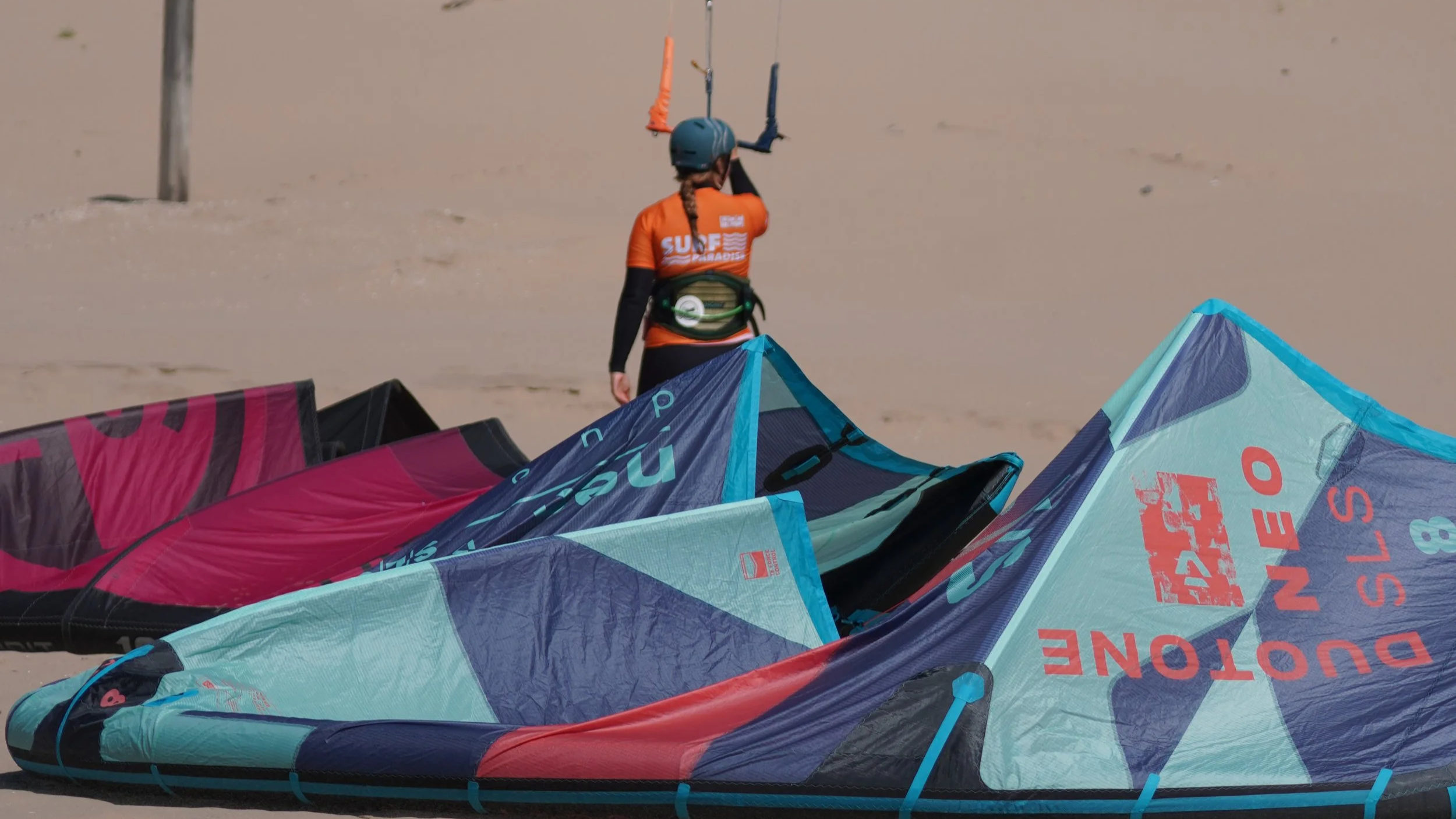
What size kite do you need?
The honest answer is that it depends on your weight and the wind, but you can get very close in ten seconds. Take your weight in kilos, divide it by the wind in knots, and multiply by about 2.2. A 75 kg rider in 18 knots lands around a 10 to 12 metre kite. Prefer a picture over maths? The chart below does the same job at a glance.
Kite size chart by rider weight and wind
Find your weight along the top and the wind down the side. The number where they meet is a solid starting kite size in square metres, for a twintip. Treat it as a guide rather than a law, because your board, your kite model and your style all nudge it a little.
| Wind | 50-60 kg | 60-75 kg | 75-90 kg | 90 kg+ |
|---|---|---|---|---|
| 10-15 knots | 10-12 m | 12-14 m | 13-15 m | 14 m+ |
| 15-20 knots | 8-10 m | 10-12 m | 12-14 m | 14 m |
| 20-25 knots | 7-8 m | 8-10 m | 10-12 m | 12 m |
| 25-30 knots | 6-7 m | 7-8 m | 8-9 m | 10-12 m |
| 30+ knots | 5-6 m | 6-7 m | 7-8 m | 8-10 m |
Recommended kite size in metres, for a twintip. A starting point, not a rule. When in doubt, size down.
How do you actually calculate kite size?
Some riders swear by the formula: weight (kg) ÷ wind speed (knots) x 2.2. It is not gospel, wind is gusty and real life is messy, but it gets you in the right ballpark fast. Run it, check it against the chart, and trust your gut for the rest. Over time you barely need either, and you quietly stop guessing your kite size altogether.
How do experienced riders pick their size?
My favourite trick costs nothing: watch what everyone else is on. Someone just came off the water? Ask how it felt. It is like checking the wind, but with actual people who just rode it. Over a season you build your own sixth sense for it.
For me, anything under 20 knots and I am reaching for my trusty 10 m. Between 25 and 30 knots, my 8 m becomes my best friend. Proper nuking day? Me and my 6 m get cosy. It is trial and error, and that is half the fun.
What size kite should a beginner get?
Here is where a lot of advice gets it backwards, including the usual “just size up.” As a beginner you actually want to lean a little smaller, because overpowered is the scary, dangerous end of the sport. In 20 knots and up, a slightly underpowered kite is safer and calmer than one trying to drag you down the beach.
But there is a lovely exception. A bigger kite flies slower through the window and is far more forgiving, so it gives you time to fix your mistakes instead of punishing them. If you can learn on a 10, 11 or 12 metre in gentler wind, that is perfect: all the float and time you need, none of the nervous little 6 metre reacting to every twitch. So the sweet spot is a bigger kite in lighter wind while you find your feet, then size down and stay comfortably underpowered when it picks up. And over time, ride in all conditions, so nothing ever catches you out.
Does your board or riding style change it?
The chart is only the starting point. A few other things pull your ideal size around:
Your board: a big floaty board gets going in less wind than a small techy one, so you can size the kite down a little.
Your experience: beginners size down a touch for safety, then ride bigger in light wind to learn on a forgiving kite.
Your style: cruising and boosting big jumps ask for different power, so your size shifts with your mood.
Your personal vibe: do you like being a bit overpowered for the adrenaline, or underpowered and chilled? Both are valid, and both change the number.
The conditions: gusty wind punches above its average, so size down when it is unsteady. Clean, steady wind lets you ride the size the chart suggests.
Your kite's range: newer kites cover a wider wind range than older ones, so a modern kite forgives a slightly wrong guess.
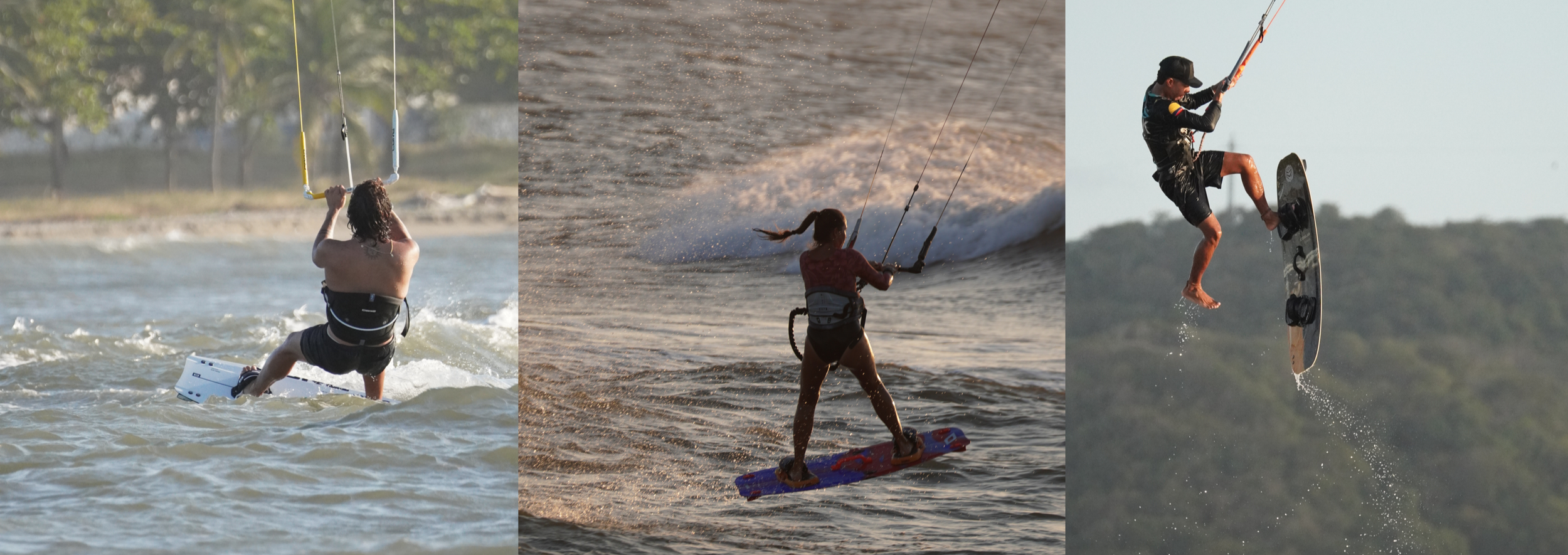
Read your local spot
Think about where you ride most. If your spot is a mellow 12 to 15 knots, keep a bigger kite handy so you are not stuck on the beach. If it regularly cranks past 25, build a smaller quiver instead. The usual wind at your home spot quietly decides half your kit, so plan around it rather than around a dream day.
Does hot or cold air change your kite size?
Yes, and this one quietly catches everyone out. Two days can read the exact same knots and still need different kites, because your kite does not feel wind speed, it feels air density. Cold air is denser, so 20 knots on a crisp winter session hits like 25 and you size down. Warm, humid air is thinner, so the same 20 knots feels soft and floaty and you size up. It is the reason a 9 metre feels chilled in Brazil and downright nuclear in Cape Town on identical wind readings.
So when the temperature swings, do not trust the knots alone. I went full nerd on exactly how this works in How pressure and humidity change kitesurfing, if you want the why behind it.
When in doubt, size down
If you are torn between two sizes, take the smaller one. Being overpowered is genuinely dangerous: it drags you, launches you and wears you out fast. Being underpowered is just a bit boring, you wait for a gust or swap up a size. That is an easy trade every time.
No shame in swapping mid-session
Pump up the wrong size, launch, and immediately think “oh no, not today”? Just come in and swap. Every kiter does it, and nobody is keeping score. Choosing kite size is part logic, part instinct and part embracing the unknown.
In the end the goal is to enjoy yourself. Even if you never pick the perfect size, you are out there on the water doing what you love, and that is the only thing that really matters. Worst case, you get a hilariously overpowered story for the next vlog. And when you are ready to add to the bag, here is how to choose your next new kite.
xox Berito
Quick answers
-
Take your weight in kilos, divide by the wind in knots, and multiply by about 2.2. A 75 kg rider in 18 knots is around 10 to 12 metres.
-
Lean a little smaller for safety, because overpowered is the dangerous end. The exception is light wind, where a bigger 10 to 12 metre kite is forgiving and gives you time to learn, so use that when you can and size down as the wind builds.
-
Size down. Overpowered is dangerous and exhausting, while underpowered just means waiting for a gust.
-
Because your kite feels air density, not just speed. Cold, dry air is denser and hits harder, so you size down; warm, humid air is thinner and softer, so you size up.
-
Yes. Foil boards need much smaller kites, and directional or strapless riding shifts it too, so treat the chart as a twintip baseline.
-
Most riders are covered by two or three sizes matched to their local wind. Check your spot's usual range and build your quiver around that.