
Predicting the swell without crying
Waves are the reason you bought a directional, told everyone you’re “more into flow now”, and started saying things like “it’s kind of sectiony.” The problem is, swell doesn’t care about your vibe. It shows up when it wants, from wherever it wants, and sometimes it arrives perfectly… while the wind is useless. So if you want consistent wave sessions, you need to predict swell, not just stare at the wind graph like it owes you money.
Swell basics in human terms
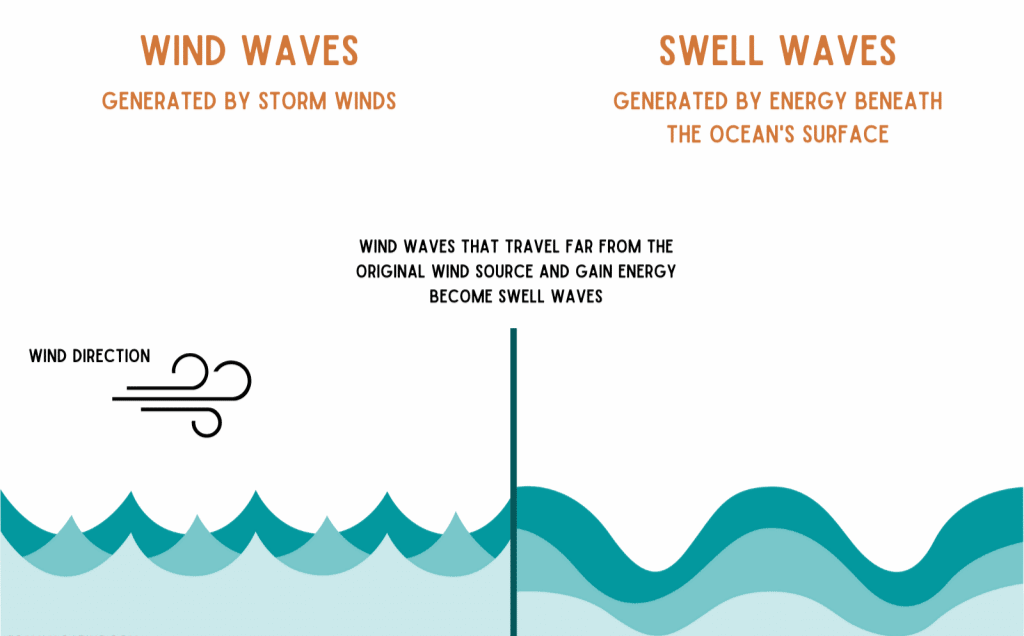
Let’s make swell less mystical. Swell is basically organized wave energy that travelled from a storm, sometimes from very far away. Wind at your beach can create waves too, but that’s usually messy wind swell. The clean stuff, the stuff you actually want to ride, is typically ground swell.
Here are the three swell ingredients that matter most:
Height, how big the waves can get, not always what you will ride.
Period, how much time between wave crests, the quality indicator.
Direction, where the energy is coming from, the “does my spot even work” indicator.
If you only take one thing from this blog, period is the biggest lie detector in wave forecasts. Two meters at 7 seconds can be chaos soup. One meter at 14 seconds can be buttery, powerful, and annoyingly crowded.
Example: You check the forecast and see 1.8 m swell. You drive there like a hero. Then you arrive and it’s just angry closeouts and whitewater cardio. The period was 8 seconds. Congrats, you chased wind swell.
Period is the real quality filter
Period is the time between waves. Longer period means more energy packed into each wave, and usually cleaner sets with more power. It also means waves feel bigger than the height number suggests.
A simple way to think about it:
Short period swell is like throwing pebbles into the ocean.
Long period swell is like throwing bowling balls into the ocean.
General guide, not a religion:
8 to 10 seconds, mostly wind swell, can be rideable, often messy.
10 to 12 seconds, getting interesting, decent structure at many spots.
12 to 16 seconds, proper groundswell, strong sets, real power.
16 plus seconds, can be epic, can also expose every danger your spot has.
This is where “besides the wind” really starts. Because wind can be perfect, but if the period is low, you’ll be carving through mush and pretending it’s intentional.
Common mistake is when people chase height and ignore period, then blame the forecast, their board, the moon, and their ex. It was the period.
Swell direction and spot angles
Swell direction decides whether your beach actually receives that swell. This is pure geometry, plus a bit of ocean witchcraft like refraction, shadowing, and bathymetry.
First, you need to know how your coastline faces. If your beach faces west, it generally likes swell from southwest, west, or northwest. If the swell comes from the opposite side of land, it will be blocked or heavily reduced.
Good direction is not universal. It is spot specific.
A swell direction is generally good when:
It points directly into the open face of your coastline.
It is not blocked by headlands or islands.
It refracts cleanly onto sandbanks or reefs at your spot.
A swell direction is often less good when:
It is too parallel to the beach, causing fast closeouts.
It is too angled and gets blocked by geography.
It hits the beach straight on with short period, turning into closeout walls.
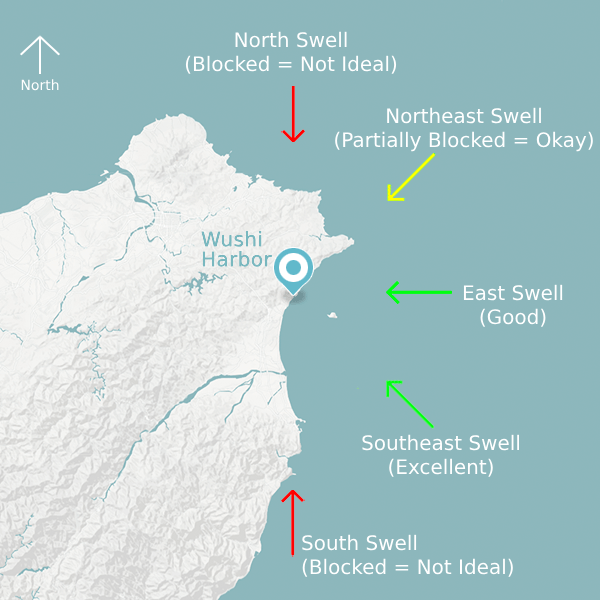
Practical example: The swell is 300 degrees, coming from northwest. Your beach faces west with open exposure. Result, solid energy hitting the sandbanks at a workable angle.
Now same swell, but your beach faces south. Result, you might see almost nothing except confused leftovers.
This is why two beaches 20 minutes apart can look like different planets.
If you want to understand how those waves actually break once they arrive, dive into the Understanding Waves blog for more detail on peeling waves versus closeouts. It makes swell direction feel less random and more predictable.
The storm story behind the swell
Swell does not spawn from vibes. It comes from wind blowing over water, over distance, for time. That’s fetch and duration.
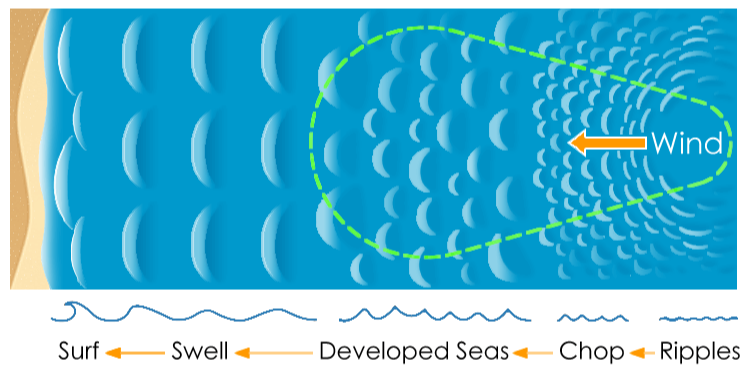
Bigger, cleaner swell usually comes from:
Strong winds in a storm system.
Long fetch, wind blowing across a large area of ocean.
Long duration, it blew hard for long enough.
So when you see a forecast showing long period swell, you are often looking at energy from a storm that happened days ago, sometimes thousands of kilometers away.
This is why swell forecasts can feel more stable than local wind forecasts. The storm already happened. The energy is already travelling. Wind forecasts are trying to predict what your local atmosphere will do tomorrow, and your local atmosphere is a chaotic toddler.
Common mistake: Checking only one swell model and calling it truth. Use at least two sources and compare with buoy data if possible.
Windy is useful for visualizing swell direction and timing.
Tides shape the final result
Now we add the part many people ignore until they stand on the beach confused. Tide. Tide changes water depth over sandbanks and reefs. That changes how and where waves break.
On sandbank beaches:
Low tide can expose shallow bars that create steeper, faster waves.
Mid tide often gives the best shape, enough water to peel but still defined.
High tide can soften everything, making waves fat and slow.
On reef or point breaks:
Low tide can make waves hollow and powerful, sometimes dangerous.
Mid tide can be the sweet spot for performance riding.
High tide can make waves less critical, sometimes slower but still clean.
Why this matters for kiters. A perfect 1.2 m @ 14s swell can turn into long peeling walls at mid tide. The same swell at dead low might close out or dump on shallow sand. At high tide it might just roll in like a lazy carpet.
Combine swell and tide like this:
Long period plus low tide equals more punch, sometimes more risk.
Short period plus high tide equals soft, often underwhelming waves.
Good period plus mid tide equals your Instagram highlight reel.
Wind and swell, the relationship
Wave kiters know this but forget it in moments of froth. Wind can groom or destroy a swell.
Basic impact:
Offshore wind can clean up faces but adds safety risk.
Onshore wind can crumble wave shape fast.
Cross shore wind often gives the best mix of rideable waves and safe positioning.
A practical combo that often works: Swell 1.2 m @ 13s from the right direction. Wind 18 to 25 knots cross shore. Tide mid or slightly incoming. Result clean faces, manageable power, real turns
A combo that looks good on paper but often disappoints: Swell 2.0 m @ 8s. Wind 25 knots onshore. Tide low. Result whitewater gym session.
Gear tips for real wave days
Once you predict the swell correctly, don’t sabotage it with the wrong setup.
Directional board basics:
Bigger board for weaker or slower waves.
Smaller board for steeper, faster waves.
More fin area for hold in bigger surf.
Less fin area for looseness in smaller, playful waves.
Kite setup:
Wave oriented kites with good drift help you stay on the face.
Shorter lines can make steering more reactive in tight sections.
Rig slightly smaller to stay in control on the wave.
Putting it all together
Example A, sneaky good day.
Forecast 0.9 m @ 15s, perfect direction.
Wind 22 knots side/cross shore.
Tide mid incoming.
Call go. This is often better than the “2 meter” hype days.
Example B, numbers look big but wrong angle.
Forecast 1.8 m @ 13s, but direction partially blocked by a headland.
Wind onshore.
Tide high.
Call manage expectations or drive to a more exposed spot.
Example C, powerful but shallow.
Forecast 1.5 m @ 16s.
Wind side shore.
Tide very low on a shallow sandbank.
Call go, but be ready for punchy sections and less margin for error.
The final set you don’t miss
Predicting a good swell is not about one magic number. It is about stacking variables in your favor. Period tells you quality. Direction tells you if your beach even works. Tide shapes the wave. Wind decides if you can actually ride it cleanly.
Run the checklist. Watch how your local spots react to different swell angles and tides. Take mental notes. Over time you will not just check forecasts, you will read them like a story.
And that is when you stop chasing random waves and start arriving on the right day. May your period be long, your tide be right, and your excuses be short.
xox Berito