
How to survive a kitesurfing deathloop?
“A deathloop happens when a kite line goes slack or wraps after a crash, causing the kite to spin violently in the power zone. The fix is checking your lines the second you resurface, the standard quick release sequence if it does start, and counter steering or your hook knife as backups if the release fails. Know these before you need them, not during.”
Kitesurfing is an extreme sport that brings a massive amount of joy into our lives, but it comes with some genuinely sketchy situations. The scariest word in the entire kitesurfing dictionary is the deathloop. A kitesurfing deathloop happens when one of your kite lines goes slack or wraps after a crash, causing the kite to spin in tight, violent circles in the power zone. It sounds rare until it happens to you, and then it becomes the one thing you think about every time you hit the water hard.
You are flying along, the sun is shining, the wind is perfect, and suddenly you catch an edge and crash hard into the water. As you resurface to catch your breath and wipe the saltwater out of your eyes, your kite starts looping aggressively. It drags you through the water like a ragdoll. It is chaotic, exhausting, and genuinely dangerous if you do not know how to react.
Hoping it never happens to your gear is not a safety strategy. Knowing exactly what causes this spiral and how to stop it means you get to ride with the fear turned down instead of ignored.
What causes the kite to deathloop?
A deathloop happens when one steering line becomes significantly shorter than the others, usually because it wrapped around the end of your bar. The kite then steers hard in one direction and cannot correct itself, which is what turns an ordinary crash into a violent, looping one. The most common trigger is slack lines after a messy crash, giving a line room to catch the end of a float.
Sometimes the culprit is not a wrapped bar at all, but a bridle caught around the wing tip, the bar stuck under your hook, or a centerline wrapped around itself.
A lot of this risk quietly builds up before you ever hit the water. Worn or badly trimmed lines and gear you have not checked in months make a wrap far more likely, which is exactly the kind of thing covered in gear mistakes that kill your progress. Hard, sudden crashes are also just more common in unpredictable gusts, worth understanding on its own if that is a regular pattern at your spot, see what is it about gusty winds.
If your lines go slack after a crash, the smart move is keeping the bar level rather than turning it, since that is exactly when a line catches the end of a float. And the moment your head is above water, check your bar and lines before anything else. There is usually five to ten seconds before a wrapped line turns into a full deathloop. Not long, but enough if it is already a habit.
A few things that keep a bad crash from turning into a deathloop:
Keep the bar level, do not turn it wildly after a crash.
Look up and check your lines the second you hit the water.
Act quickly, you usually have about five seconds to clear a caught line.
If it all goes south anyway, ditch the harness with the kite.
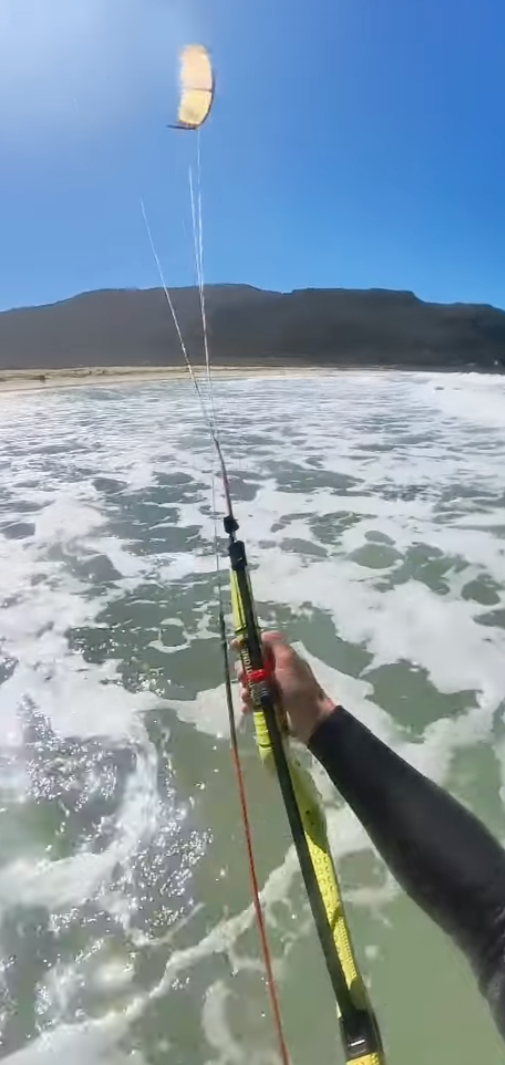
How do you stop a deathloop?
The standard fix is to let go of the bar completely and use your quick release. Pulling the bar only powers the kite up more and makes the loop worse, so the instinct to hold on and muscle it through is exactly the wrong one. Letting go on its own will probably not end the loop, but the steps after it will.
Here is the order that actually works, useful to know before your brain blanks in the moment:
Let go entirely: release the bar from your hands.
Quick release: push the chicken loop away to flag the kite.
Wait and watch: see if the kite loses power and flags out.
Drop the leash: if it keeps looping aggressively, eject completely.
If the loop is caused by a bridle caught around the wing tip, stick to this same sequence, bar sheeted out, quick release popped. Trying other techniques in that specific situation can seriously damage your kite fabric, and keeping your kite in the sky in the first place is still the best deathloop prevention there is, see keep your kite in the sky.
What if the quick release does not work?
Sometimes the quick release will not work at all, usually because the bar is physically caught, wrapped around your body, wedged under your hook, or a centerline is trapped. In that case counter steering is worth trying first, before assuming you have to eject.
If the kite is pulling hard to one side, grab the opposite side of the bar and pull to balance the tension. Keep pulling until the kite levels out.
How counter steering behaves in different wind:
Light wind: the kite backstalls and lays flat on the water.
Strong wind: the kite keeps flying but loses power and slowly steers down to the water.
Once it is flat or without power, the wrapped lines can be cleared safely.
The stronger the wind, the more dangerous this becomes, so treat it with real caution.
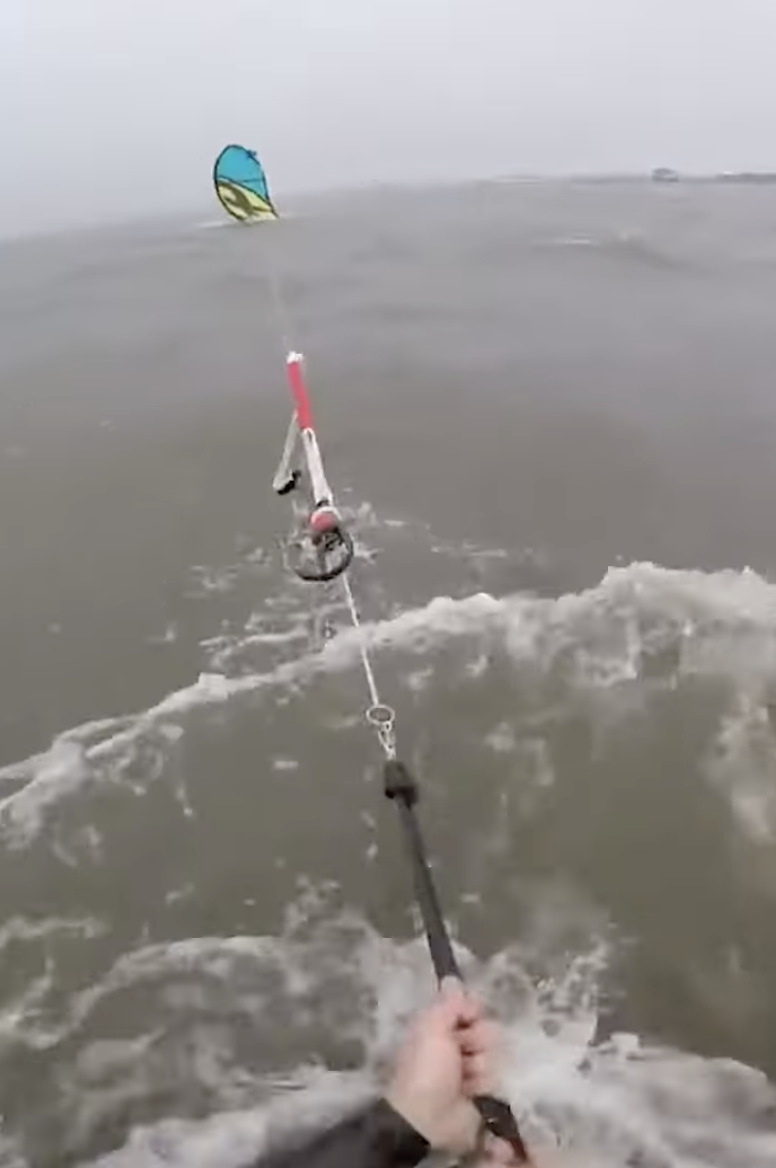
Pulling a single line
Another option is pulling one twisted line all the way in until the kite flags out. Any one of the lines works for this. Once pulled in, the kite flags, the canopy comes toward you, and the other lines go slack, taking all the power out of the kite because the aerodynamic profile is fully disrupted.
This comes with a real warning attached. Grabbing a tensioned line in strong wind is not a minor risk:
Entanglement: excess slack line can wrap around your legs.
Hook hazard: loose line loves to catch on your harness hook.
Finger injury: grabbing a tensioned line in strong wind is genuinely dangerous.
Wind limit: only attempt this in light wind, or once the kite is already down and not pulling much.
Grabbing a tensioned line in twenty five knots on a nine meter kite is asking for a medical emergency. This method belongs in calm conditions only, or once the kite has already lost most of its pull.
Dropping the leash and using a knife
If your lines are badly tangled around the bar and the centerline is caught, the primary release can fail entirely. Your safety leash eject still works at that point, but you will lose the kite to the wind. Releasing it is the backup plan when you are being dragged out to sea. Losing expensive gear is a real cost, but nowhere near what your safety is worth.
If a line wraps around your body, a hook knife is the last resort. Because it only comes into play when everything else has failed, it is rarely easy to use while still getting pulled under.
Getting the most out of a knife when it actually matters:
Check it is there and free of rust before every session.
Practice reaching for it without looking down.
Aim for whichever line has the most tension.
Cut quickly through anything wrapping your body.
You can also read up on safety standards directly from the IKO to make sure you are following current best practice. If the kite is still looping after all of this, ditch the harness.
Ride safely another day
None of this is meant to scare anyone away from the water, kitesurfing is a genuinely great sport. The real risk is not the deathloop itself, it is going out without knowing the safety protocols. Keeping the bar level after a crash, knowing your release sequence, understanding counter steering, and knowing exactly when to let go of your gear entirely takes the panic out of the situation before it ever starts.
Next time you rig up, take ten seconds to physically touch your chicken loop, your safety leash, and your knife. Know where they are, trust them, and keep riding.
Letting go of a kite is a lot cheaper than a helicopter rescue.
xox Berito
Quick Answers
-
Usually a line going slack after a crash and then wrapping around the end of the bar, though a caught bridle, a bar stuck under the hook, or a wrapped centerline can also trigger one.
-
Let go of the bar completely, then use the quick release to flag the kite. Pulling the bar instead only makes it worse.
-
Try counter steering first, pulling the opposite side of the bar to level the kite, then clear the tangled lines once it has lost power.
-
Yes. It can drag a rider violently through the water and, in the worst case, out to sea, which is why knowing the release sequence before it happens matters.
-
Yes, as a last resort backup for the rare case where a line wraps around your body and the standard release has failed.