
Surviving gusts and lulls
We all know the feeling of staring at a wind app and seeing perfectly green numbers. You rush to the beach, pump up your kite, hit the water, and suddenly you feel like you are riding a highly caffeinated mechanical bull. The wind pulls your arms out of their sockets one second, and then drops completely, leaving you to faceplant into the water the next.
Welcome to the wonderful and absolutely exhausting world of gusty wind. We often get so obsessed with the average wind speed numbers on our screens that we completely ignore the actual quality of the wind. A solid twenty knots is pure magic, but a session swinging violently between twelve and twenty eight knots is pure survival mode. Riding in these conditions can burn out your legs and your patience in less than twenty minutes if you do not know how to handle it. But do not worry, you do not have to pack up and go home just because the wind is acting like a brat.
Riding gusty wind is a technical skill that you can absolutely master. It requires a mix of smart forecasting, the right gear choices, and a few technical adjustments to your riding style.
Reading the forecast right
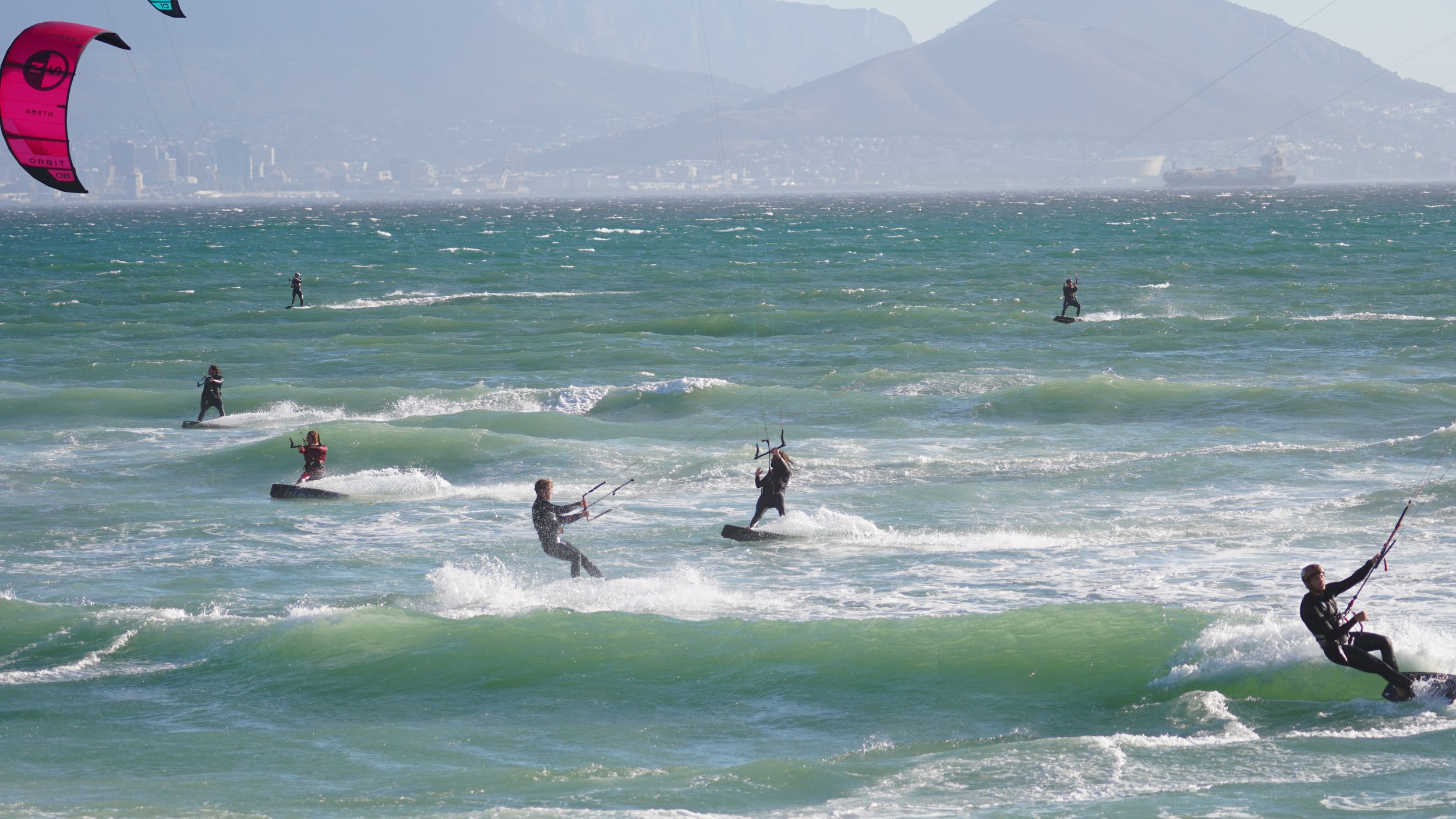
Before you even grab your keys to drive to the beach you need to understand what you are actually looking at on your phone. A common mistake many riders make is only looking at the base wind speed. If your app says eighteen knots that sounds like a lovely freeride session. But you need to look at the gust rating. If the gusts are hitting thirty knots you are walking into an absolute battlefield. The gap between the base wind and the gusts dictates the quality of your session. A gap of three to five knots is completely normal and comfortable. A gap of ten or more knots means the wind is highly unstable and will require serious physical effort to ride. You can use platforms like Windy, Windguru or Windfinder to check the detailed breakdown of the wind profile. Always look at the graphs that show the spikes. If the graph looks like a jagged mountain range you need to mentally prepare yourself for a heavy workout.
Here are the key things to look for on your weather app:
Base wind: Look at the normal average speed first
Gust spikes: Check the difference between base and gust
Wind direction: Notice if it blows over land or water
Wind shadow: Beware of obstacles creating choppy air


Another pro tip is to check the wind direction relative to the land. If the wind is blowing over buildings, trees, or large dunes before it hits the water it will be chopped up and incredibly gusty. This is a technical reality called wind shadow. You can read more about how this works and how does wind happen to get a better grasp on your local spot. Knowing what is coming is half the battle won.
Pick the right kite size
Once you arrive at the beach and realize the wind is all over the place you face the ultimate gear dilemma. Do you rig your kite for the heavy gusts or do you rig for the dead lulls. This is where dreams are either made or crushed. The golden rule of gusty wind is to always rig for the gusts. If you pump up a big kite so you can ride comfortably through the lulls you are going to get absolutely destroyed when a massive gust hits. You will get ripped off your edge, lofted into the air, and you will drain all your energy just trying to hold the kite down. Instead you want to rig a smaller kite that you can safely handle during the absolute peak wind speeds.
To survive the changing power you should optimize your setup:
Size down: Always rig your kite for the gusts
Board choice: Grab a larger board to survive the dead lulls
Trim strap: Pull it actively to reduce excess power
Depower range: Pick a kite shape that handles wind spikes well
Yes, rigging smaller means you might sink a little bit when the wind drops into a lull. But sinking into the water is safe and slightly annoying, whereas being completely overpowered by a massive gust is terrifying and dangerous. Using a larger board compensates perfectly for the smaller kite. When the lull hits the extra surface area of your board will keep you planing above the water while your small kite takes a nap. You can also actively pull your trim strap to reduce the power of the kite when the base wind starts picking up too much.
Adjusting your stance
Riding gusty wind requires a very dynamic body position. You cannot just lock into your favorite cruising stance and expect to survive. Your legs are your shock absorbers and you need to use them actively. When you see a dark patch of water rushing towards you that means a gust is about to hit. You need to prepare your body before it actually reaches your kite. Drop your hips lower to the water, bend your back leg deeply, and push hard through your heel to hold your edge. You want to resist the extra power by driving the board firmly into the water.
Master this dynamic body movement to save your legs:
Gust hits: Drop your hips low and edge hard
Absorb power: Bend your back knee like a heavy spring and engage your core even more
Lull arrives: Flatten your board out completely
Maintain speed: Ride slightly downwind to avoid sinking
Then comes the tricky part. The lull. When the wind suddenly dies your natural instinct is to keep pushing hard on your heels. If you do that you will sink immediately like a rock. When you feel the power drop you need to flatten your board out slightly. Stand up a bit taller, release the hard edge, and let the board glide flat over the water. You are essentially trading your upwind angle for speed so you do not sink. It is a constant dance of edging hard and flattening out. This constant shifting of your weight is exactly why gusty days burn your legs out so fast. But if you actively manage your stance you will save a massive amount of energy compared to fighting the kite rigidly.
Managing bar pressure
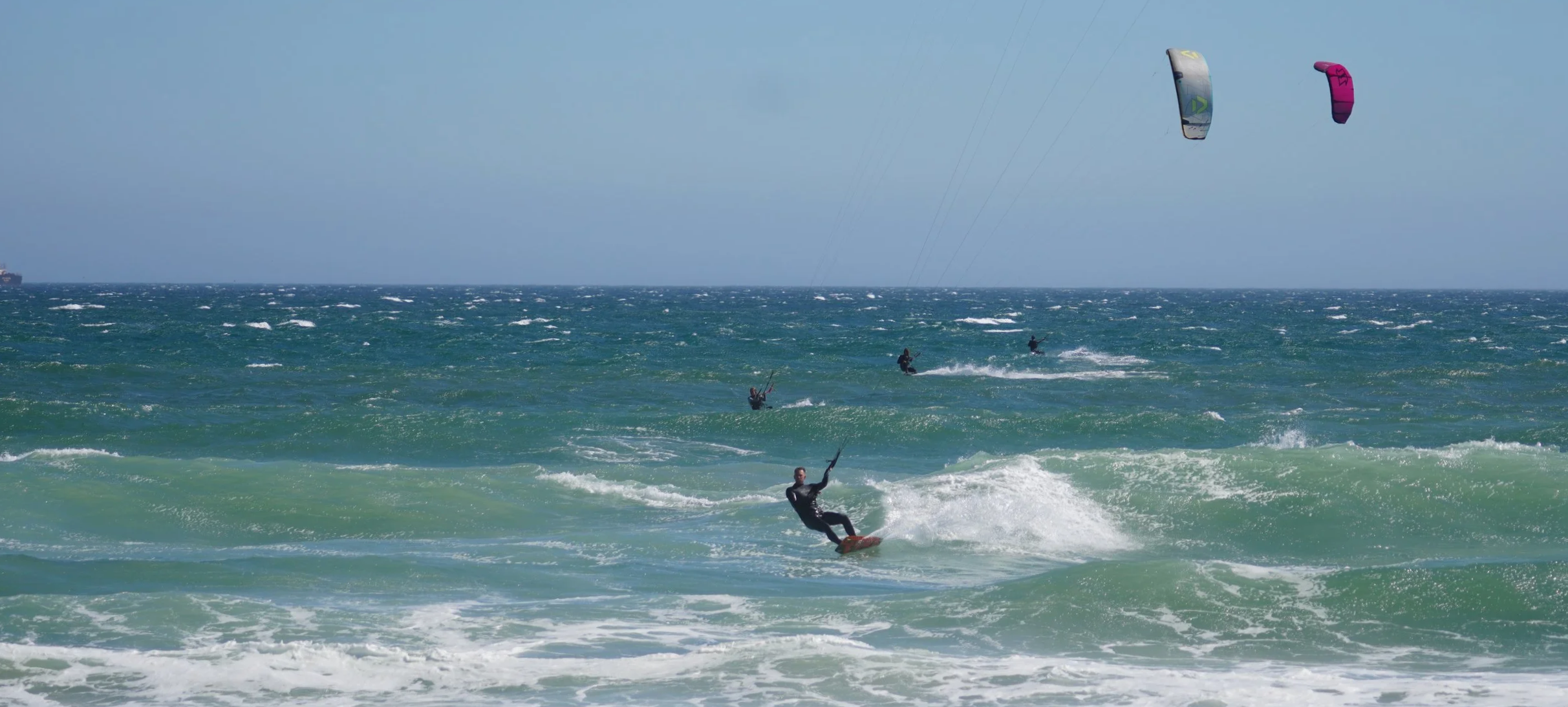
Your control bar is the steering wheel and the gas pedal combined into one single piece of equipment. In smooth wind you can just find the sweet spot and leave the bar there. In gusty wind you have to work the bar constantly. A very common mistake is the infamous death grip. When kiters get scared by a heavy gust they pull the bar close to their chest and hold on for dear life. This is the exact opposite of what you should do. Pulling the bar in chokes the kite and gives it maximum power. You need to let the kite breathe.
Focus on these bar movements to stay in control:
Death grip: Do not pull the bar close to your chest
Spill wind: Push the bar away when a massive gust hits
Catch wind: Pull the bar slightly in during a dead lull
Create power: Work the kite up and down to generate apparent wind
When the gust hits you must push the bar away from you to depower the kite and let the excess wind spill out over the canopy. Keep your arms relaxed and your elbows slightly bent. When the lull hits you pull the bar back in slightly to catch whatever wind is left and keep your speed up. You also need to actively fly the kite in the lulls. Do not just let it sit statically at forty five degrees. Work the kite up and down slightly in the wind window to generate apparent wind. This technical movement creates your own power when nature refuses to provide it.
Saving your energy
Even with perfect technique riding gusty wind is incredibly taxing on your body and your mind. You are constantly anticipating, reacting, and fighting the elements. The biggest secret to not burning out early is knowing when to take a break. You do not have to stay on the water for three straight hours just because you drove to the beach. Break your session up into smaller chunks. Ride for forty minutes, come back to the beach, drink some water, and rest your legs.
Follow these tips to keep your energy levels high:
Mini sessions: Ride for forty minutes and take a beach break
Lower goals: Do not try complex unhooked tricks in survival wind
Stay hydrated: Drink plenty of water between your heavy sessions
Gym prep: Build strong legs to handle the constant shock absorption
You also need to lower your expectations on days like this. A gusty day is usually not the time to try a highly technical new trick that requires perfect kite control. Trying unhooked tricks in twenty five knot gusts is a great way to dislocate a shoulder or break a rib. Instead use these sessions to practice your board control, your stance, and your upwind riding. Sometimes the best reward is just knowing you survived a brutal session without breaking your gear or your body.
Survive the next gust
Gusty wind can be a total nightmare but it is also one of the best teachers in the sport of kitesurfing. It forces you to become an active rider instead of a lazy passenger. By learning how to read the forecast properly, rigging for the heavy hits, softening your stance, and working your control bar you transform a survival session into a really fun challenge. Yes your legs will still burn and yes you will probably still swallow a bit of seawater when a lull drops you unexpectedly. But that is just part of the tuition fee for becoming a resilient and highly adaptable kitesurfer. Next time the wind graph looks like a jagged saw blade you will know exactly what to do. Take a deep breath, pump up that smaller kite, and go show the choppy wind who is actually in charge (the wind).
Just remember that blaming the wind is totally valid when nobody actually saw you crash.
xox Berito