
“Do not fix on a number: schools often say six to ten lessons, I would say about 10 hours gives you a good base, but it really depends on you and the spot. Lessons teach you to set up, launch, land, relaunch, water start, bodydrag, ride and get back, and they teach you the rules. Riding upwind and being consistent is what you do yourself, practising again and again until it feels natural, ideally with someone experienced on the beach.”
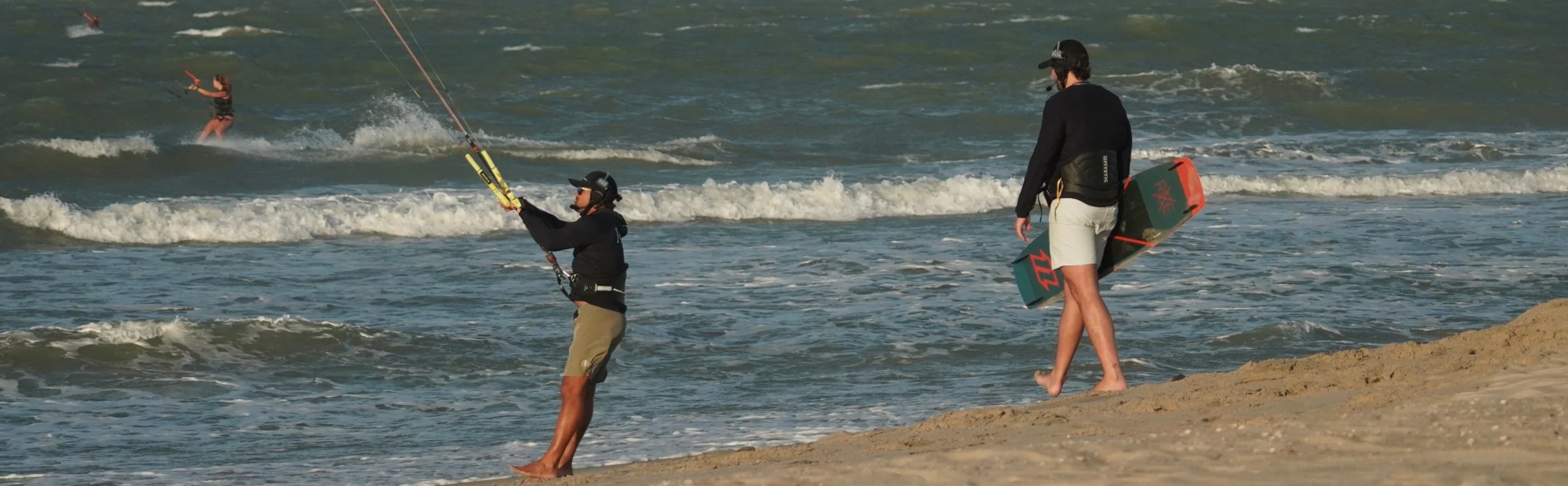
At the end of my last lesson, my instructor said it was my own time now. Go and try it yourself. On paper that sounds like a graduation. On the beach it felt more like being dropped off at a new school where nobody is watching you anymore.
That moment is the real answer to how many kitesurfing lessons you need. Lessons get you to the point where an instructor trusts you to go and practise. Everything after that, getting upwind, getting consistent, slowly becoming the person who knows what they are doing, happens on your own time. Schools sell the first part. The second part is free, and it takes as long as it takes.
How many kitesurfing lessons do you really need?
There is no fixed number, and anyone who promises one is guessing. IKSURFMAG and most schools land on six to ten lessons. My own read is that about 10 hours, more or less, gets most people a good base. But it really depends on the person, the spot and the wind.
Some people stand up in their second lesson and ride off like they were born on a board. Others need twice the hours and swallow half the ocean on the way. Talent plays a part, but so do the wind, the water and plain luck with the week you picked. Neither speed says much about what kind of kiter you will be in a year.
What matters is what the lessons are for. They give you the base. They do not give you every skill you need, and they are not supposed to.
Why does the number change so much?
Because the conditions decide more than you do. Warm, flat water with steady wind is a very different classroom from a cold sea with chop, current and shorebreak.
The wind comes when it comes. This is the one people forget when they book. You plan a week, you picture yourself riding by Friday, and then the wind does not show up. At a spot with a reliable thermal wind that week can work out. At a lot of places it will not, and a lesson week with two windless days is simply a week with two lessons fewer. Book with some slack, or book lessons at home where you can go when the forecast is good.
The water is next. In a shallow lagoon you stand up, fall, reset and go again. On an open coast a lot of lesson time goes into fighting the current, getting through the shorebreak and wading back. You learn more per hour in easy water, and you learn to deal with more in hard water.
Then there is duo or private. A private lesson gives you more kite time and a bigger bill. I love duo lessons and would pick them over private every time. You try, then you watch the other student try, and you get a moment to breathe in between. You talk about what went wrong, you see someone else fall the same way you did, and sometimes you see them get it first and figure out why. Especially in harder places like the North Sea, those little breaks and that second pair of eyes help a lot.
And board sports help. If you wakeboard, snowboard or surf, the board part tends to click sooner. The kite part does not care about your snowboard.
What do your lessons actually give you?
More than people think. By the end of my lessons I could pump up my kite, lay out and connect the lines, launch and land, relaunch from the water, help someone else launch and land, bodydrag to retrieve your board after a crash, water start, ride and get myself back. That is a real base to build on.
Mine were a handful of duo lessons in the North Sea: a day on the beach, a day of body dragging, then water starts until I was riding a little. What a lesson day really looks like, including everything that happens before you touch the water, is in what really happens in kite lessons.
The part I would push hardest is the rules. Right of way, who launches where, how you pass someone, what to do when you are the one coming in. They are the reason a busy beach works instead of turning into a pile of crossed lines. If your school skips them, ask. You will reap the benefit every single session, and why kitesurfing rules matter explains the bigger picture.
The one thing my lessons skipped was self rescue. I learned it properly much later, and I have needed it three times in one year. If yours skip it too, ask for that as well. When and how to self rescue shows why.
When are you ready to kite alone?
When you have the base: you know what your kite does, you can relaunch it from the water and you are comfortable enough to get back to where you started. For a lot of people that is right after their lessons, for others it takes a few more sessions with an instructor.
Riding upwind is not a must to start practising on your own. It helps, a lot, but it is something you get by trying, not something you need before you are allowed to try. It took me almost a year to ride upwind consistently, which is its own story in going upwind took me forever. What you do need is the comfort to ride back, or at least to get yourself and your gear back to the beach without drama.
There is also an official version of independent. The IKO calls it Level 3, Independent Kiteboarder, and the German VDWS has a basic licence that asks for upwind riding plus a theory test. Rental shops abroad sometimes ask for one of those before they hand you gear. Useful to have, but it is a card, not a feeling.
What happens after your last lesson?
You go and try, every session, and that is where the actual learning starts. It is also the scary part, because nobody is watching you anymore and it is all on you now.
You can keep paying an instructor to stand next to you, and honestly, that is fun too. More lessons are never wasted. But at some point you have to go out and get it wrong on your own. You drift downwind, you drop the kite, you relaunch it, you try the water start again, and slowly the things that felt like luck start to feel like skill.
Buy your first set as soon as you can. It sounds like a big step, but it speeds things up. You learn to trust your own gear instead of getting used to a different rental kite every time. And kite gear is not cheap, so once it is sitting in your hallway you feel a lot more obligated to actually go when the wind is on.
It helps a lot to have someone experienced on the beach. Not to coach you, just to be there, to help you launch and land and to notice when you are in trouble before you do. Pick a spot like the one you learned at for those first sessions, with space, few people and a beach that keeps going downwind, the kind of beach in how to pick your first kite spot.
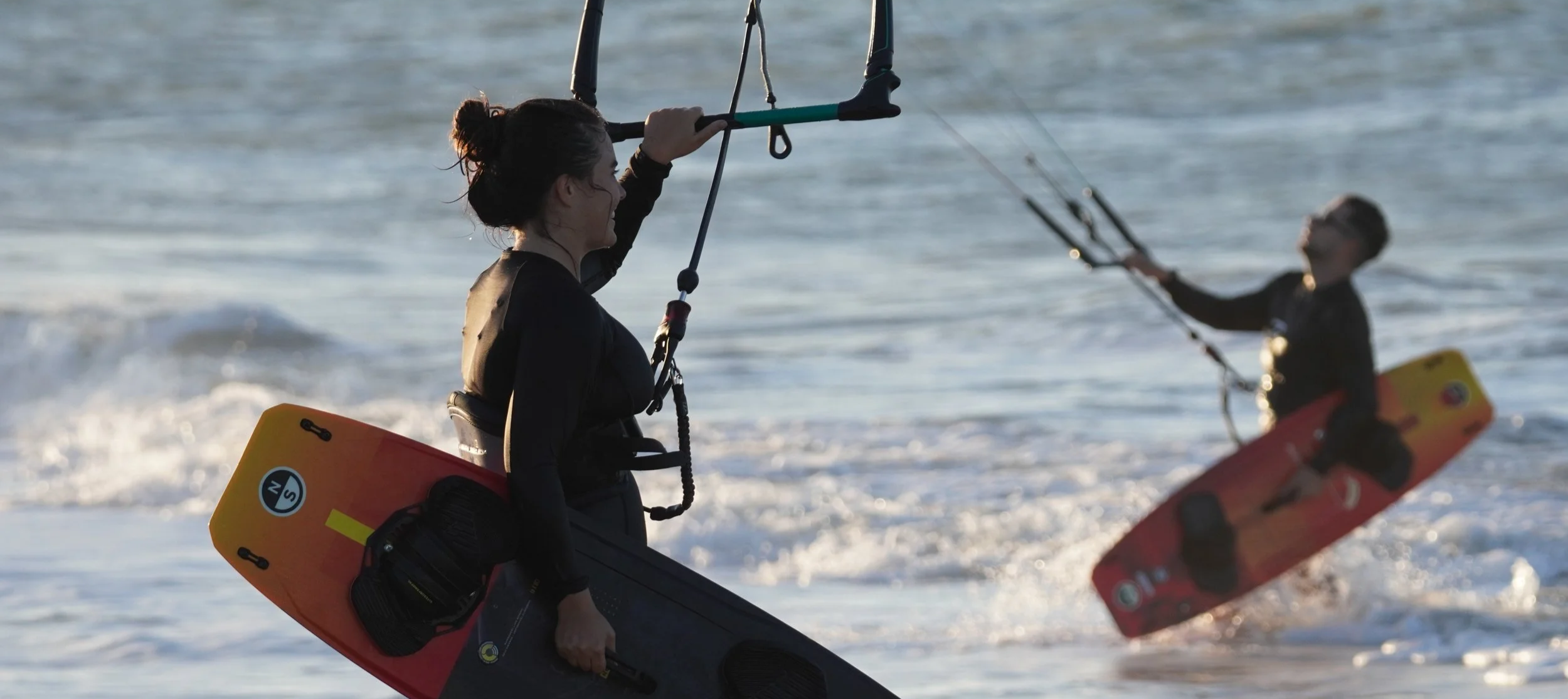
What if you kite at a new spot?
Go to a local school first and ask for some supervision or a guided first half hour. They tell you how the spot works, where the hazards are and which kite you need that day.
This is the bit that hardly ever gets said: there are more options than lessons. Supervised sessions, rental with someone watching from the beach, a short guided intro to a spot you do not know. Right after your lessons you are comfortable in conditions that look like your lessons. A new beach, a different wind direction or a crowded launch can make you feel like a beginner again, and half an hour of local knowledge fixes most of that.
Before you book the package
Forget the number on the package. Book the lessons to get your base, ask about the rules and self rescue if they are not on the list, and keep some slack for the days the wind does not show up.
The lessons get you started. The riding is on you.
xox Berito
Quick answers
-
Schools often say six to ten lessons, and about 10 hours gives most people a good base. It really depends on the person, the spot and the wind.
-
Sometimes, at a spot with reliable wind. The wind comes when it comes, so a week without wind is a week without lessons.
-
Private gives you more kite time, duo gives you rest, a buddy to learn with and someone to watch. I prefer duo, especially in harder conditions.
-
When you know what your kite does, can relaunch it, body drag to your board or beach and are comfortable getting back to the beach. Riding upwind helps, but it is not a must to start practising.
-
No. The safety systems, launching and landing and the rules need someone to teach you.
-
Ask a local school for some supervision or a guided first half hour. They tell you how the spot works and which kite you need.