
“A kitesurf self rescue is how you get yourself and your gear back to shore when your kite can no longer bring you there. It ranges from simply body dragging in to wrapping your lines, climbing onto your kite and sailing home. Learn it, watch it, practise it, because swimming back is a lot harder than it looks from the beach.”
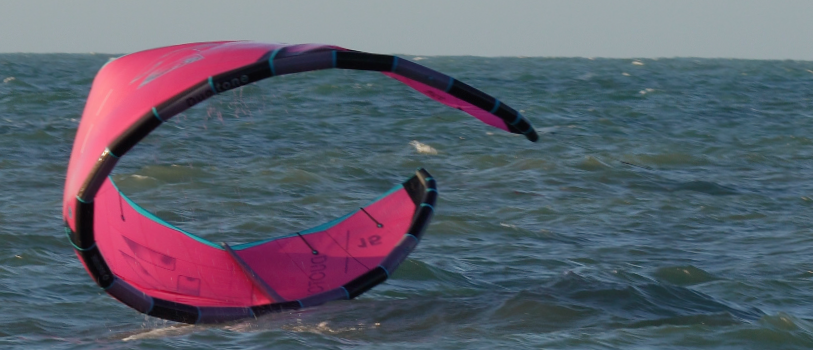
I never did a self rescue in my kite lessons. Not once. It was one of those things that got mentioned, nodded at and then skipped because the wind was good and everybody wanted to ride. Then, in the space of one year, I needed it three times.
A leaking kite that refused to fly. Wind that simply died on me. A chicken loop that came loose at the worst possible moment. Three completely different situations, one boring skill that got me back on the sand every single time. So yes, I am slightly evangelical about this one.
What is a self rescue in kitesurfing?
A kitesurf self rescue is the way you get yourself, and ideally your gear, back to shore without help when you can no longer ride. In short: you release the kite, make your way to it along the safety line, secure your lines and use the kite as a float or a sail to get back.
That is the big version. There is also a pack down version for when there is no wind at all, where you roll the kite into a float. And there are smaller, easier versions that also count as self rescue. More on those below. The full step by step comes further down, once you know why it matters.
When do you need to self rescue?
You need a self rescue whenever you cannot ride back to the beach anymore. The trick is choosing the right level of rescue for the situation, because not every problem needs the full routine.
Think of it as layers, from easy to full on:
Body drag in: your kite still flies but you cannot ride, because you lost your board, got hurt or simply ran out of energy. Fly the kite low and let it drag you to shore. Leave the board if you have to, and if you still have it, lie on it. If I am injured and the kite still flies, this is always my first choice.
Release and swim the last bit: you are close to the beach and the kite is down. Use your quick release and swim the final stretch. Only do this when the beach is genuinely close.
Float and drift: onshore wind and the kite on the water. No need for a quick release. Sometimes you can keep hold and let the kite push you in. It works, but it can take a lot of time and it does not look pretty.
The full self rescue: the beach is far, the kite will not fly and you need everything secured in one place. This is the one you have to know by heart.
The full version is what you need when the wind drops, a line snaps, your kite loses air, your bar fails or the wind turns offshore. That last one deserves its own warning, which is why offshore wind is more sketchy than sendy for most of us.
Why is swimming back harder than it looks?
Because you cover distance on a kite many times faster than you ever will in the water. A spot that feels close when you are riding can be a seriously long swim, and swimming in a wetsuit with a harness on is exhausting.
I once saw a video where riding out for one minute meant about an hour of swimming back. That number stuck with me, and it is not an exaggeration if you add some chop, cold water and a bit of current pulling you sideways.
The other problem with just floating around next to your kite is the lines. When there is no tension on them, they go everywhere. Around your legs, around the board, around the kite. If a gust suddenly picks up the kite while you are tangled up in that, it gets scary fast. A full self rescue puts all your gear in one place. It looks horrible, but it is under control.
My self rescues in the past few years
The leaking kite. My kite slowly went soft, like a bouncy castle at the end of a birthday party, until it stopped flying altogether. It still held enough air to float, but the beach was too far to release everything and swim. So I did the full self rescue. Because the kite still had some air in it, it kept me floating while I sorted out the lines, and I sailed and kicked my way back step by step.
The wind that died. One minute I was riding, the next there was nothing. It was about a fifteen minute swim, which I could have done with the kite just lying there. But I knew what loose lines do in the water, so I did the full self rescue instead and swam in with everything packed together. Slower to start, much calmer overall.
The chicken loop. My chicken loop came off, the kite flagged out on the safety line and I could not get the quick release back together. Some bars just get stuck. I was not going to sit there fighting it, and swimming back without the gear felt silly when I had a floating kite right there. So I finished the self rescue and came back to shore with all of it.
Three times in one year. Before that, zero. I am very glad I knew what to do.
How do you do a full self rescue, step by step?
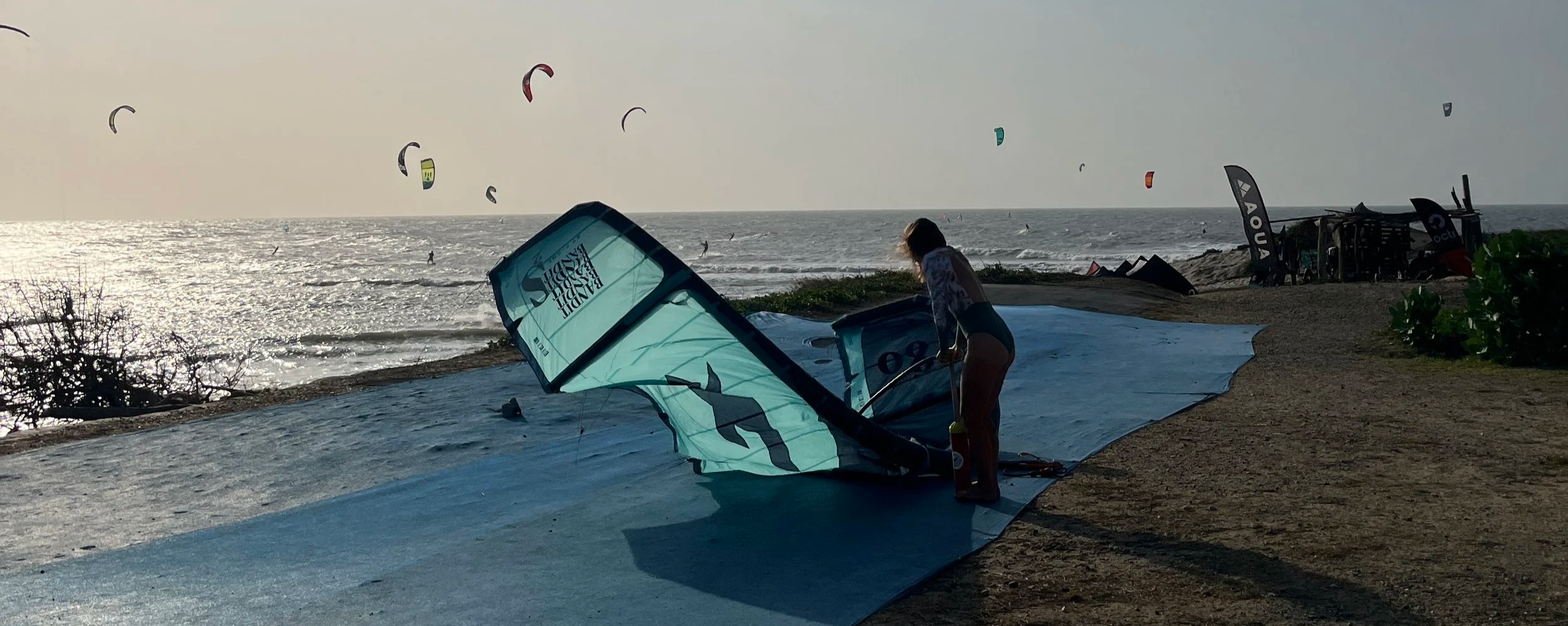
You release the kite, climb the safety line to the bar, lock it, wrap the rest of the lines on the way to the kite, secure everything and then sail or float in. Here is the full version:
Let go of the bar and pull your quick release. The kite flags out and you are now only connected through the safety line on your leash.
Climb the safety line hand over hand to the bar. Keep the lines away from your body and never wrap a line around your hands or fingers. Lying on your stomach with your feet up helps.
Lock the safety line on the bar first. Secure it to the end of the bar with a couple of half hitches, then wrap it in figure eights so the kite cannot power up again. This line always comes first.
Wrap the other lines as you move towards the kite. Gather all of them and keep wrapping figure eights around the bar. Do not leave any line out of the wrap.
Get to the kite and secure the bar. Once you are close, swim to the leading edge and hold on to it. Lock the lines onto the bar with half hitches while there is no tension on them. Keep your leash connected.
Flip the kite if needed. If it is upside down, push one wingtip under and let the wind flip it. Working from a wingtip is a lot easier than from the middle.
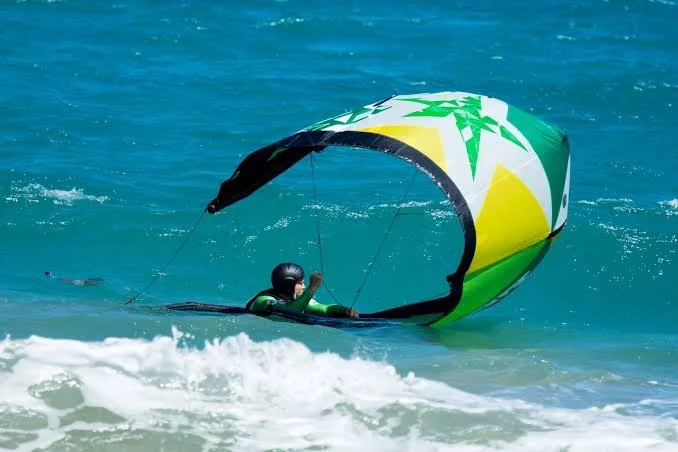
Sail or float in. Hold the leading edge, fold one wingtip over by pulling the bridle or self rescue handle, and the kite turns into a sail. The closer you move to the opposite wingtip, the more it pulls you downwind. Use your legs to steer, like you do when body dragging.
It is slow and it is messy. That is fine. Calm and slow beats fast and tangled.
How do you pack your kite down in deep water?
When there is no wind to sail with, or you are about to hit breaking waves, you turn your kite into a float. You do this after step 5 above, with the bar and lines already secured.
Check the struts. Make sure your struts still hold air and that their valves are closed. If your kite has a one pump system, close the strut hoses first. The struts are what keep you floating.
Let the air out of the leading edge. Open the leading edge deflate valve and let it go soft. Please to this above the water. You don’t want water inside of your kite.
Roll the kite up. Fold it over, grab both wingtips and roll towards the center strut, squeezing out the leftover air as you go.
Close the deflate valve. Otherwise water gets into the bladder.
Make a bundle. Put the bar on top, wrap your harness or leash around everything and pull it tight. Now you have a float you can lie on while you swim.
Only deflate if you are confident you can make the swim or someone is coming to get you. An inflated kite floats better and is easier to spot. And if you are heading into a shore break, pack down before you reach the waves, not in the middle of them.
What if the wind picks up again?
Then you can reverse your self rescue. Because everything is wrapped and in one place, you can unwrap the lines again, put your quick release back together and relaunch. Keep the lines attached to the kite while you unwrap them, and work slowly.
This is exactly why packed gear beats floating chaos. If the wind comes back while your lines are loose and tangled, you have a problem. If they are wrapped on the bar, you have options.
But know, going to the beach, sorting out the situation and then launch again is in most cases the safer option.
Where do you learn self rescue properly?
At a kite school, in the water, with an instructor next to you. Then you keep it fresh yourself.
Ask your school: if you did not do a self rescue in your lessons, ask to try one. If your school does not know how to teach it, that is not good. You need this skill, full stop. Read what really happens in kite lessons to see what a decent course should cover.
Watch the videos: there are plenty of good self rescue and deep water pack down videos on YouTube. Watch a few, then watch them again. Memorise the order until you can say it out loud.
Practise on a boring day: light wind, safe water, a friend on the beach who knows what you are doing. Once a season is a good habit.
What makes a self rescue easier or harder?
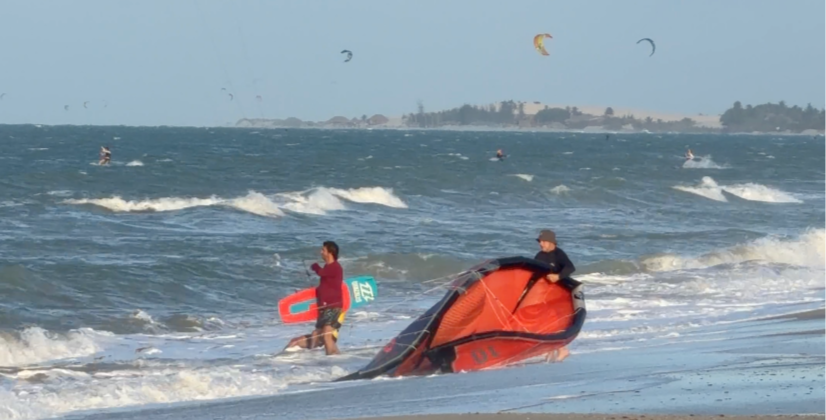
Onshore wind in flat, warm water makes a self rescue almost relaxing. Offshore wind, current, waves and cold turn it into a completely different job.
Current: it can push you sideways or out faster than your kite sails you in.
Waves: loose lines and breaking waves are a terrible combination.
Cold: your hands stop working, and a self rescue is a lot of fiddly hand work.
Gear: a working safety leash, a kite that still floats and a line knife you can actually reach make a real difference, which is the whole point of all that safety gear.
Before your next session
A self rescue is not cool, nobody films it and it will never go viral. It is still one of the few kite skills that decides how your day ends. Learn it, practise it when nothing is at stake, and hope it collects dust.
From my own experience: it is more than a mess, it will not look pretty, but you do get back safely.
xox Berito
Quick answers
-
It is how you get yourself back to shore without help when you can no longer ride, using your kite as a float or a sail.
-
When your kite can no longer bring you back and the beach is too far to swim comfortably, for example after the wind drops, a line snaps or the wind turns offshore.
-
Always the safety line. Lock it on the bar first so the kite cannot power up, then wrap the other lines.
-
Yes, but it is harder. Pack your gear down before the shore break and keep the lines away from your body.
-
It means letting the air out of the leading edge and rolling the kite into a float, used when there is no wind to sail back.
-
If the gear is putting you in danger, yes. You come first, a kite can be replaced.