
Kitesurfing in South Africa, a spot guide
“From November to March the southeaster turns the coast around Cape Town into one long kite park, with a spot for every level within a few hours of the city. Blouberg for big air, Brandvlei and Langebaan for flat water, the West Coast and the Peninsula for waves, and Macassar, Betty’s Bay and Witsand when you want something different. Bring small kites, a thick wetsuit and a rental car.”
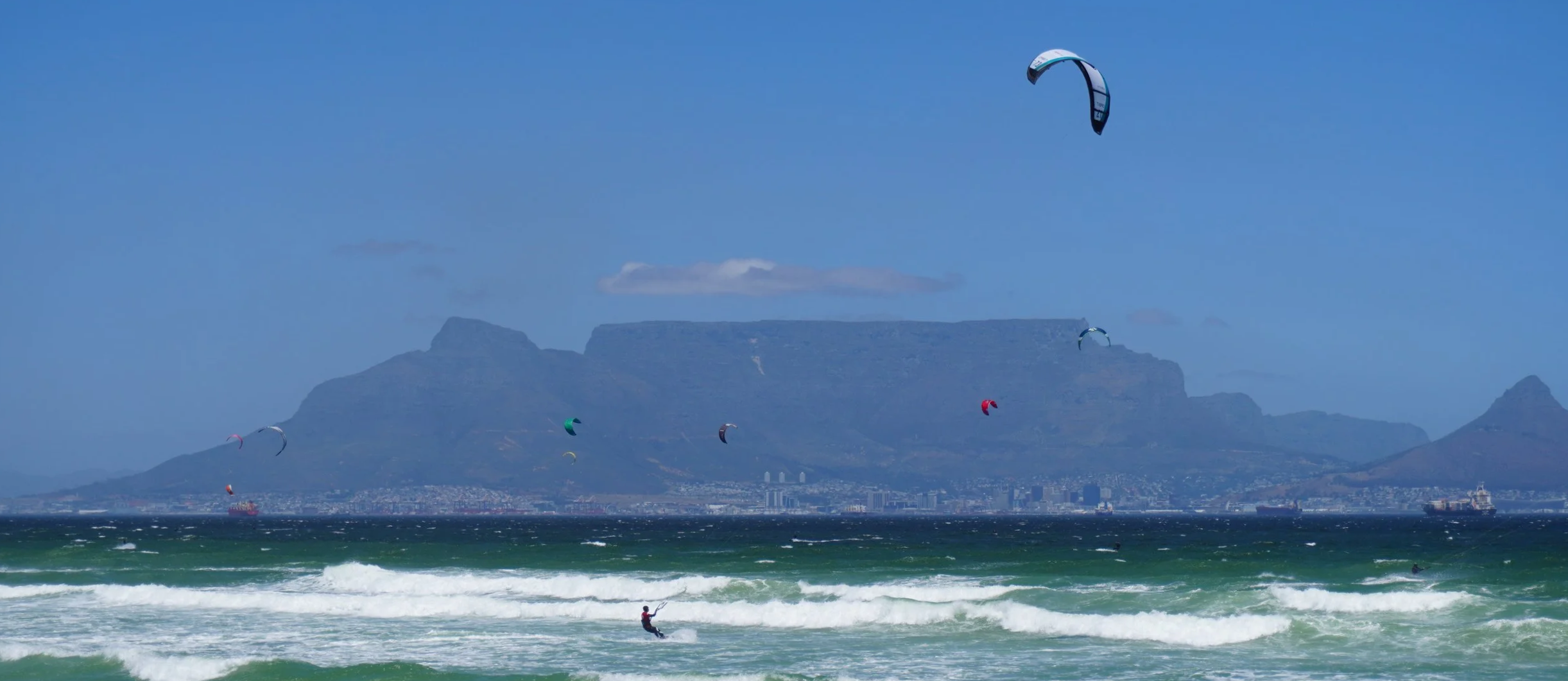
South Africa has a reputation, and most of it is earned. People come back from Cape Town with sunburn, one or two snapped lines and a story about the day it blew 40 knots and they went out anyway. What most of them do not come back with is a full picture of the coast, because they spent three weeks at Kite Beach staring at Table Mountain and never drove further than the supermarket. I have ridden South Africa quite a bit, and the honest truth is that the famous spots are famous for a reason, but this coast has a lot more to give than one crowded beach. So here is the recap: the known spots, a few that deserve more love, and why you should get on that plane.
Why kite in South Africa at all?
Because the wind is about as close to guaranteed as kitesurfing gets. From November to March the southeaster, known locally as the Cape Doctor, blows on most afternoons at 20 to 35 knots (see the best kitesurfing spots by month for how that compares to the rest of the world), and the spots within a few hours of Cape Town cover every style of riding you can think of.
The engine behind it is simple. A big high pressure system sits over the South Atlantic, while the land heats up in the southern summer and pulls air towards it. Squeeze those two together around the tip of Africa and you get a wind that switches on reliably and is not very good at switching off. Table Mountain adds its own twist. The air accelerates over and around the mountain, which makes the wind gustier close to the city. That is why the same forecast feels rougher at Blouberg than an hour further north.
There is a second effect that catches every first timer. The southeaster pushes warm surface water away from the coast and cold water from the deep comes up to replace it. This is called upwelling, and it is why you can stand on the beach in 30 degree heat and then fall into water that feels like it came straight out of the fridge.
For the forecast, Windguru works fine for every spot in this post, and how to read a kitesurfing forecast explains what to look for. Look at the direction as hard as you look at the speed, because along this coast the direction decides which beach is on.
Wind is the main reason most of us kiters go to South Africa, but do not forget about life. Everything around Cape Town is amazing, the city, the nature, the food. So a windless day is not going to be boring, and when the wind takes a holiday has more ideas for those days.
Which Blouberg spot suits you?
The Bloubergstrand strip is the one on every poster: a run of beaches north of the city, all with the Table Mountain view. From south to north you get Sunset Beach, Dolphin Beach, Kite Beach, Big Bay, and then Haakgat and Melkbosstrand further up the road.
Sunset Beach has the most space and is where I would go when the launch at Kite Beach looks like a festival car park, but look out for the windshadows and all the windsurfers. Dolphin Beach is the big air playground, with waves to boost off and a crowd that likes an audience. Kite Beach is the postcard. It is busy, it is wavy, and on a good day half the riders on the water have sponsors. Lovely to just sit on the boulevard and watch them do crazy stuff. Big Bay is a little more sheltered and shared with a lot of surfers, so stay out of the surf zone unless you enjoy being shouted at in Afrikaans. Haakgat is a reef point for wave riders, with rocks, kelp and a shorebreak that does not care about your plans. It is not the place to try waves for the first time or argue with a windsurfer. Melkbosstrand is the quieter end of the strip, with more room and a more relaxed vibe if you are willing to drive another fifteen minutes. As a wannabe waverider I love the downwinder from Sunset Beach to Dolphin Beach. But what really gets me going is the endless space at Melkbosstrand.
A classic Blouberg scene: someone rips on a 7 metre at 30 knots while a visitor on a 12 metre gets dragged up the sand at the launch. Same wind, very different afternoon. Size down here, the gusts close to the mountain are no joke.
Is there flat water near Cape Town?
Yes, and you have two options. Brandvlei is the inland one, and Langebaan is the classic on the coast.
Brandvlei Dam sits near Worcester, about two hours inland from Cape Town, through the mountains on the N1. It is a big freshwater lake with flat water and no waves, which makes it a great place to work on a new trick or your first jumps without the ocean throwing things at you. It is also a lot warmer than the Atlantic, so you can leave the 5/4 in the car. You have two ways in. There is a watersports centre where you pay for access and get facilities, or there is a free parking spot on the other side of the lake if you just want to rig and ride. Because the wind comes in over land and mountains, it is gustier than on the coast, and it can blow really strong. Expect holes, expect punches, and rig a size smaller than your ego wants.
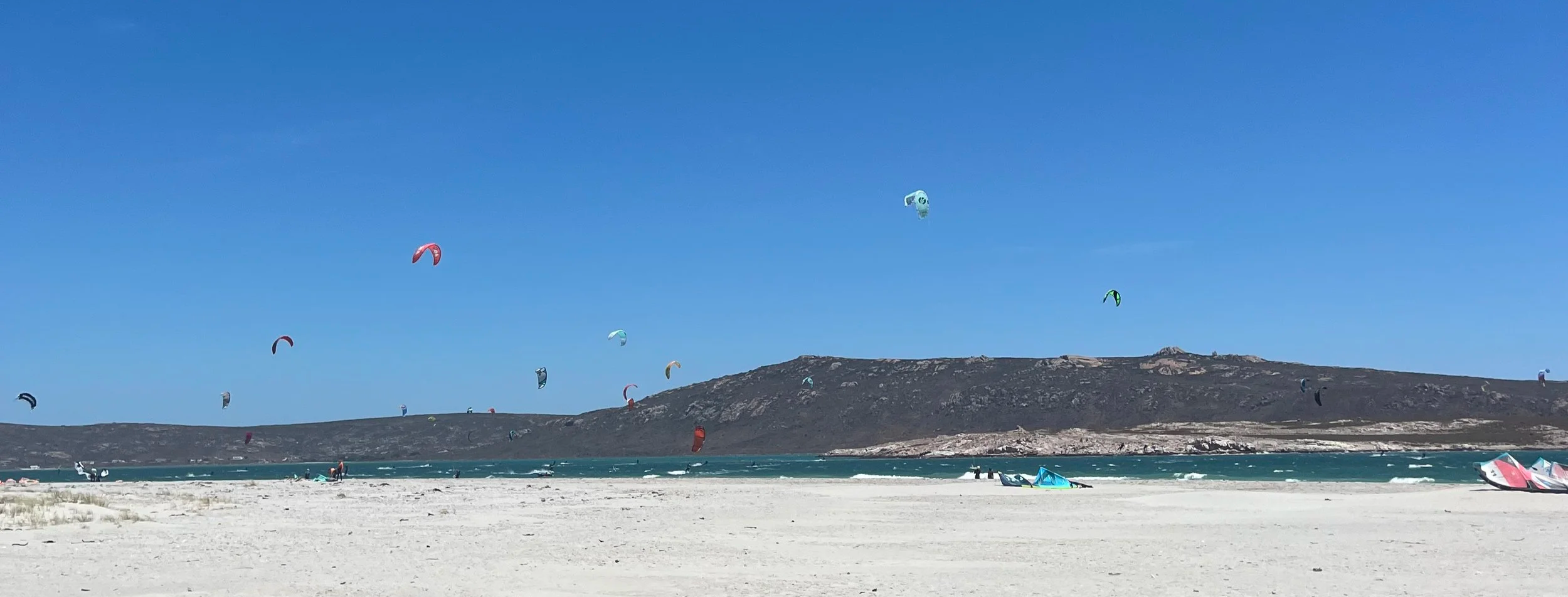
Langebaan is the flat water lagoon about an hour and a half north on the R27, with Main Beach and Shark Bay as the main launches. It is shallow, turquoise and often windier than the forecast, but it is also busy and the tide changes the water more than you would expect. Everything is in kitesurfing Langebaan, worth it?, including which beach suits which rider.
If there is no wind forecast along the coast, Brandvlei could be the place to go. But note, it is a place to kitesurf, not to chill around. Besides the car park there is absolutely nothing.
Where are the West Coast waves?
Keep driving north and the crowds thin out fast. Yzerfontein, Paternoster and Elands Bay are where the West Coast gets raw: cold water, proper waves and beaches where you might be the only kite in the sky.
Yzerfontein is the closest, about an hour from Cape Town, with a long beach and waves that work well on a southerly. The waves are powerful but clean, I absolutely love it. It is an easy escape on a day when Blouberg is crowded and gusty. Paternoster is a fishing village further north with white houses, seafood and a wave break that is not for beginners. It needs the right direction and strength to work, and what Windguru has to show for a good session is all in kitesurfing Paternoster.
Elands Bay is the far one, around two and a half hours north, and better known for its surf break than for kiting. It is remote, the water is cold even by West Coast standards, and the surfers were there first. Ride it with respect and you get waves without a crowd. A perfect place to make it a week trip.
What about the Cape Peninsula?
The Peninsula is the wave side of Cape Town, with Kommetje, Witsands, Misty Cliffs, Scarborough and Cape Point on the Atlantic and Muizenberg on False Bay. It is beautiful, it is wild, and it rewards riders who check the wind angle before they pump.
The key thing to understand here is that the coastline keeps turning. The same southeaster lands side shore at one beach and offshore at the next, a few kilometres away. Kommetje is a serious wave spot with rocks, kelp and strong wind, made for experienced wave riders. If the wind is blowing even slightly offshore, do not go out alone, because nobody is coming to get you.
Witsands, Misty Cliffs and Scarborough sit so close together that most riders treat them as one spot and switch between them depending on the wind and the waves that day. Not to be confused with Witsand on the Breede River, which is three hours further east. Expect strong wind and big waves, and on the wrong day it can be properly scary. On the right day you ride in front of one of the best views in the country, and some of my best sessions in South Africa happened right here.
Muizenberg is the softer option on the False Bay side, known for its gentle surf and colourful beach huts. The water on this side is usually warmer than on the Atlantic side, which your toes will appreciate. Muizenberg also has an official Shark Spotters programme with a flag system on the beach. Check the flag before you launch, it takes ten seconds.
And then there is Cape Point itself, at the very tip of the Peninsula, where you kite at Platboom Beach. It sits inside Table Mountain National Park, so you pay the park entrance fee at the gate. The waves can be amazing, but they are strong, and so is the wind. Make it a day trip: pack food, water and spare gear, and enjoy the drive through the park while you are at it.
What is east of Cape Town?
Drive east around False Bay and the coast gets quieter with every kilometre.
Macassar Beach is the first stop, on the far side of False Bay near Somerset West. It is known for strong wind and plenty of space, but it is also known for being unsafe, because it sits close to the townships. Go with a group, never go alone, and leave nothing in the car.
Betty’s Bay is about an hour and a half from Cape Town along Clarence Drive, one of the most beautiful coastal roads in the country. It looks amazing, with mountains dropping straight into the sea, and the water is cold even by Cape standards. It is worth the drive, either as a stop on the way to Hermanus or as a day trip on its own.
If you have a few extra days, keep going. Witsand, where the Breede River meets the ocean, is about three and a half hours east of Cape Town and is one of the windiest corners of the country. The river mouth gives you flat water with very few people, and the ocean side has waves when you want them.
The catch is the river itself. The tide pushes water in and out of the mouth, and the current can be strong enough to carry you somewhere you did not plan to go. Ride with the incoming tide when you can and know where you will come in before you go out.
On the way back, stop at Hermanus. The Klein River lagoon near Grotto Beach is flat and shallow, and in the shoulder season you might share the bay with whales.
What gear should you pack?
Pack small, pack warm and pack spares. South Africa punishes big kites and thin wetsuits more than any other spot I know.
A 7 and a 9 metre cover most days for an average rider, add a 12 for Langebaan and lighter days
A 4/3 wetsuit at minimum, or a 5/4 if you get cold easily
Booties for the reef spots and rocky launches
Spare lines, a pump hose and a repair kit
A small twintip for the strong days, a surfboard if you plan to ride the wave spots
Your bar and lines get hammered in this wind, so check them before the trip, not on the beach. And if you are deciding which kites to bring, rig for 25 knots, not for the 15 knots you ride at home.
Which mistakes do visitors make?
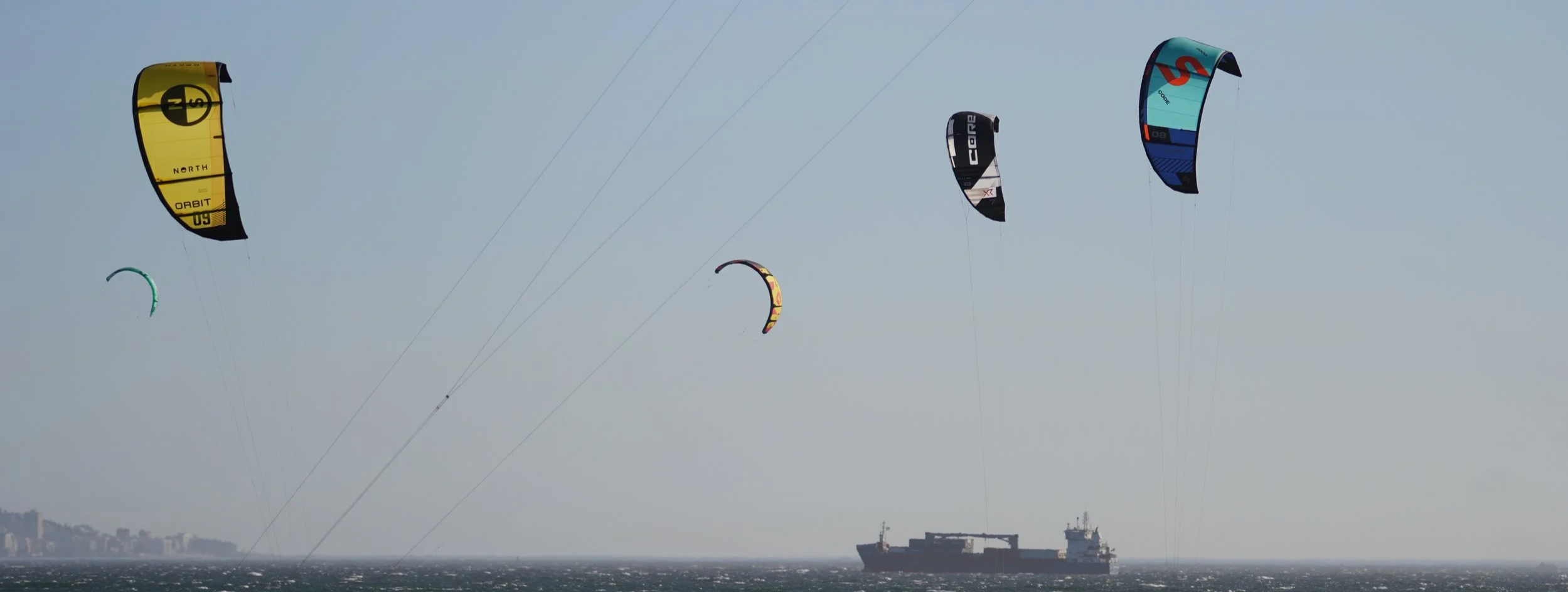
The biggest one is rigging too big. A gust off Table Mountain on an oversized kite is how most of the injury stories start. When in doubt, take the smaller kite and enjoy being the person who is not being dragged across the car park. Cape Town has cold air, which is denser and hits your kite harder than you are used to. 25 knots in Europe can feel punchy but lovely, 25 knots in Cape Town feels like surviving.
The second is ignoring the direction. Visitors check the speed, see 25 knots and drive to their favourite beach, where it is blowing offshore. Pick the beach for the direction, not the other way around.
The third is leaving things in the car. Petty theft at beach parking spots is real. Take your valuables with you or leave them at home.
The fourth is staying at one beach for the whole trip. Blouberg is great, but three weeks at one launch means you miss the lagoon, the West Coast and the river mouths that make this country special.
Before the Cape Doctor calls
South Africa is not a hidden gem, everybody knows the wind is good. What is hidden is how much variety sits within a few hours of Cape Town. Rent a car, base yourself near Blouberg, and plan each day by the forecast direction. Big air on the Blouberg strip, flat water at Brandvlei and Langebaan, waves up the West Coast and on the Peninsula, and Witsand when you want a river mouth to yourself. Bring small kites, a thick wetsuit and enough sunscreen for your face, because the Cape Doctor will take care of the rest.
The Cape Doctor does not make appointments. He just shows up at noon and rearranges your hairstyle.
xox Berito
Quick answers
-
November to March, when the southeaster blows on most afternoons. December and January are the most reliable months.
-
A 7 and a 9 metre cover most days for an average rider. Add a 12 for Langebaan and lighter days.
-
Langebaan, two flat water spots. The Blouberg beaches are wavy and gusty, so they suit intermediates and up.
-
Cold, because the southeaster brings deep water up to the surface. Bring a 4/3 wetsuit at minimum.
-
Yes, the Breede River mouth has flat water and strong wind with few people. Watch the tidal current in the river.