
Kitesurfing Langebaan, worth it?
“Langebaan is the flat water lagoon an hour and a half north of Cape Town, and from November to March the wind often blows harder than the forecast promised. Main Beach and Shark Bay are both excellent and both crowded, and the tide changes the lagoon more than most people expect. It is worth the trip for flat water and progression, just do not expect to have the lagoon to yourself.”
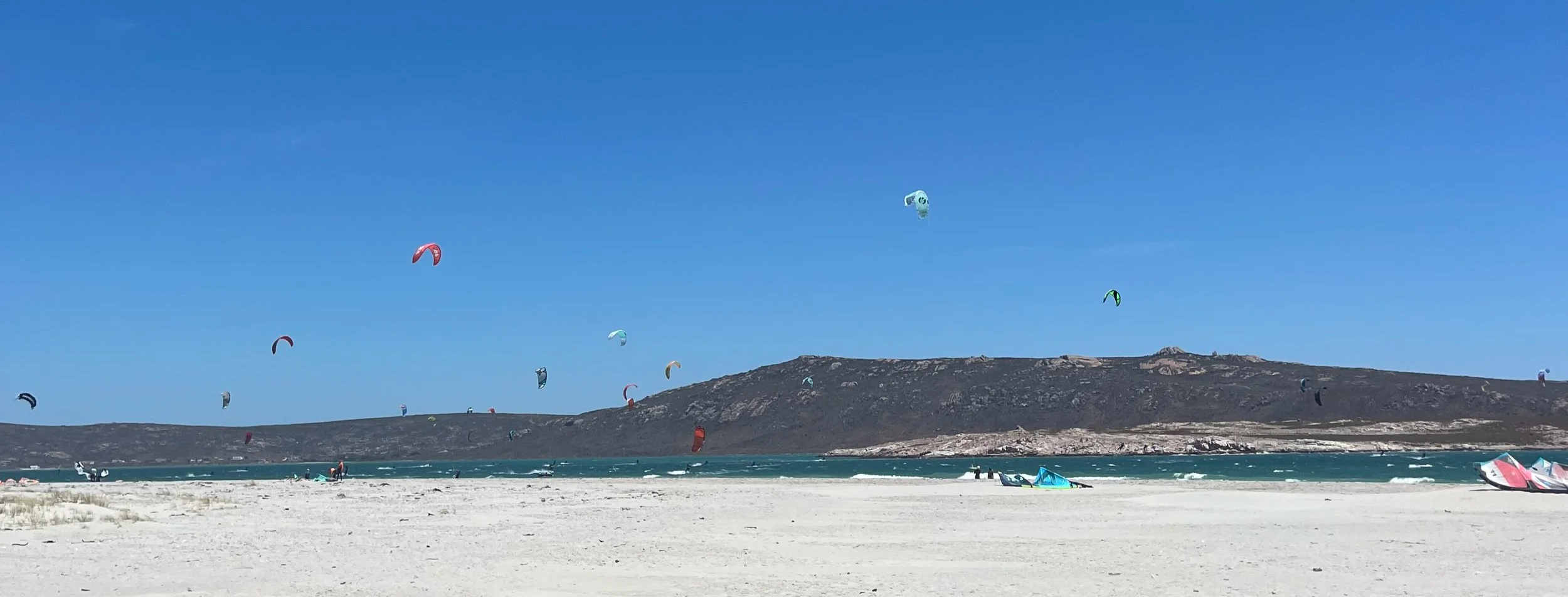
Every Cape Town kite trip ends up with the same conversation. Somebody has had enough of the chop at Bloubergstrand, somebody else wants to stop getting washed around in the shorebreak, and eventually someone says the word Langebaan. I have ridden both Main Beach and Shark Bay, and the short version is that the lagoon deserves its reputation. The long version includes crowds, a wind that takes its time, a tide that has opinions, and a car park where you do not leave anything on the seat.
If you are coming to South Africa for flat water, freestyle or simply more hours on the board, keep reading. If you came for waves, Paternoster is further up the same road and a completely different animal.
Where is Langebaan and how far is the drive from Cape Town?
Langebaan sits on a long, shallow lagoon on the West Coast, roughly an hour and a half north of Cape Town along the R27. It is close enough for a day trip and far enough that most people end up staying the week.
The lagoon is part of the West Coast National Park, which is why the landscape still looks mostly empty around it. The town side is where the kiting happens. That matters because the lagoon is divided into zones, and kiting belongs in the multi use zone near town. The southern end is a closed wilderness area and another section is reserved for sailing, so the water you are allowed to ride is smaller than the lagoon looks on a map. The SANParks water sports page has the zone layout.
When is the wind season in Langebaan?
November to March, the Southern Hemisphere summer, when the southerly wind sets in over the West Coast almost daily. December and January are the most reliable months, and March and April soften into lighter days that foilers enjoy.
What surprised me most was not the strength, it was the timing. Mornings are often slow, sometimes properly dead, and the wind builds through the day until the afternoon feels nothing like the breakfast forecast. I have rigged for what the app said and ended up overpowered an hour later more than once. The land heats up, the pressure difference grows, and the shape of the terrain funnels the flow across the lagoon, the same squeeze I explain in why some places are windier than others. The forecast is a starting point here, not a ceiling.
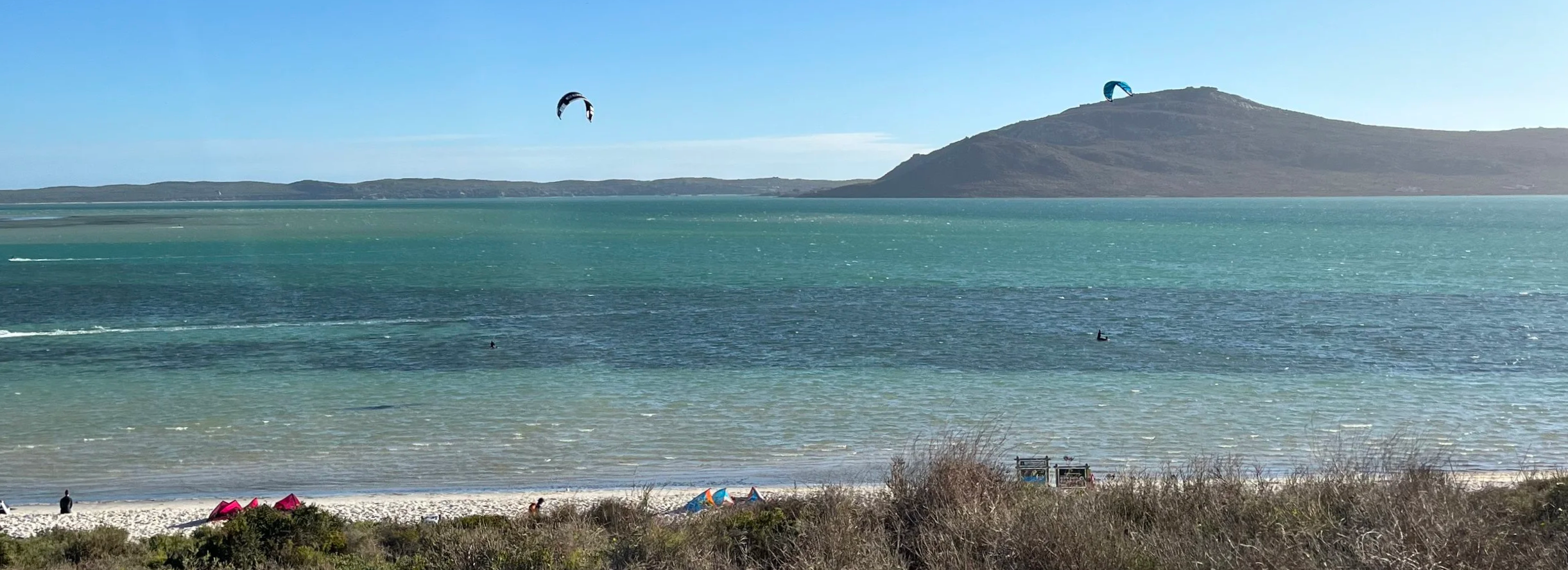
Main Beach or Shark Bay, which spot should you ride?
Both, depending on what you want from the session. Main Beach is the town beach, with deeper water, more chop and more room on the sand. Shark Bay is the postcard: shallow, flat and clear, and full of kite schools.
| Spot | Main Beach | Shark Bay |
|---|---|---|
| Water | Deeper, choppier | Shallow, flat, waist to chest deep |
| Best for | Freeride, freestyle, bigger jumps | Learning, first tricks, flat water sessions |
| Crowd | Busy, lots of riders | Very busy, schools and lessons |
| Watch out for | Traffic on the water | Sandbars at low tide, beginners everywhere |
On paper Main Beach is the quieter choice. In practice it was crowded too when I rode it, just with more experienced riders and more speed on the water. Shark Bay is where the lessons are, which means the water close to the beach is a moving obstacle course of kites going in directions their owners did not choose. Every one of us was that learner once, which is the whole point of what really happens in kite lessons.
How crowded is Langebaan in peak season?
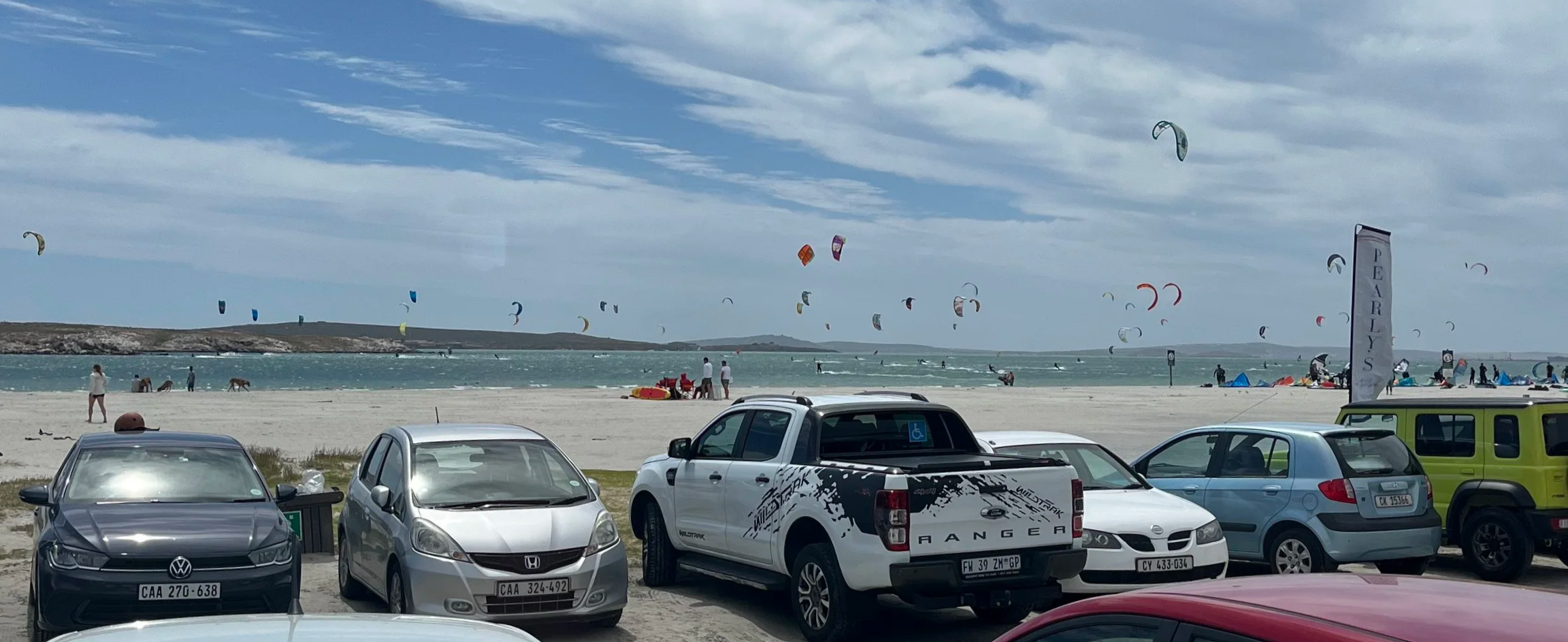
Very. In December and January you share the water with schools, holiday riders, locals and half of Cape Town escaping the city wind. The flat water that makes Langebaan great is the same thing that fills it.
The crowd changes how the spot rides. Launch and landing zones get tight, right of way gets tested, and the busiest hour is exactly when the wind is at its best. Riding a little upwind or out into the bay thins it out noticeably. If you want a refresher on how shared beaches stay friendly, the unspoken rules of kitesurfing etiquette is the one to read before you go.
How does the tide affect kitesurfing in Langebaan?
More than anything else on this list. The lagoon drains and fills with every tide, and that moves a lot of water through a shallow basin in a short time.
At low tide Shark Bay turns into flat pools between sandbars, which is lovely for tricks and less lovely when your fin finds the sand at speed. At high tide the same water gets deeper and choppier. The current running in and out is strong enough to take a lost board a long way, and it changes your apparent wind as well, since riding with or against it shifts how powered you feel. The tide also comes up the beach faster than you expect, so gear left low on the sand is gear that goes for a swim. The mechanics behind this are in what you should know about high and low tide.
What wetsuit and kite size do you need?
A 4/3 was what I rode in, and I did not regret it. Shallow parts of the lagoon warm up on sunny days, but the West Coast water is cold by any standard and the wind makes it feel colder.
For kites, the range matters more than the number. With slow mornings and strong afternoons, a bigger kite for the start of the day and a small one for when it cranks is what most riders end up carrying. Where you fall inside that range depends on your weight and your board, and how to choose the right kite size has the chart.
Is Langebaan good for beginners?
Yes, it is one of the best places in South Africa to learn. Shallow, flat water means you can stand up after every crash, and the schools at Shark Bay know the spot inside out.
The honest caveats are the crowd and the current. Learning next to thirty other learners is chaotic, and a board drifting away on an outgoing tide is a long walk back. A school that works the spot every day knows where the sandbars sit at each tide, which is most of what makes the lagoon safe to learn on. Three that do exactly that:
Obsession: a hundred meters from Main Beach, with radio helmets and boat rescue as standard, plus wing foil lessons. And if you’re interested in becoming a kite instructor? They are an amazing place to get your IKO.
Constantly Kiting: around since 2007, based near Main Beach and teaching at Shark Bay too, with multi day zero to hero camps
ONYX Kiteboarding: want to learn at shark bay? They are the ones you need.
Once you can ride upwind confidently, Paternoster is the natural next step.
Is it safe to leave your car and drive back at night?
No. Car break ins are a known problem at West Coast kite spots, and Langebaan is not an exception. Everyone in the car park knows the owner of that car is out on the water for the next two hours.
The riders who never have a problem are the ones whose seats are empty, whose boot holds nothing they would miss, and whose keys ride with them in a waterproof pouch instead of under a wheel. Nobody ever regretted travelling light, which is also the argument in travel smarter with your kite.
The drive deserves the same attention. Between Cape Town and Langebaan there is basically one road, the R27, mostly a single lane each way with long straights where everyone overtakes. Local drivers have a system for it: slower cars move onto the shoulder to let you pass, and a quick flash of the hazard lights says thank you. Knowing that before you get behind the wheel makes the road a lot less stressful.
Night is where I would be most careful. After a good session I heard more than one sketchy story about cars waiting on that road for tired kiters driving home, especially on the empty stretches between the small villages. Driving back while it is still light is the easy fix.
And learn from my mistake. Between Langebaan and Melkbosstrand there is not really a petrol station, and on our way back we ran completely dry twenty meters before the first one. Twenty meters. Close enough to read the prices, too far to roll. Fill up before you leave, because an empty tank on a dark stretch of the R27 is exactly where you do not want to be.
So is Langebaan worth it?
For flat water, yes, without much hesitation. It is where you get the most sessions per week out of a Cape Town trip, and it is where most people land their first real tricks. Just do not expect a secret spot. Langebaan stopped being a secret a long time ago.
Go for the afternoons, respect the tide, pack two kites and lock the car. Then drive up to Paternoster on the day the swell arrives.
Worst case, you run out of wind. Just do not run out of petrol on the R27, because nobody is coming to pump that for you.
xox Berito
Quick answers
-
November to March, with December and January the most reliable. Mornings are often slow and the wind builds through the afternoon.
-
Yes. The water at Shark Bay is shallow and flat and there are several schools, but it gets crowded.
-
Main Beach is deeper and choppier with more space on the sand. Shark Bay is shallow, flat and full of kite schools.
-
About an hour and a half north on the R27.
-
A 4/3 is a safe choice. The lagoon warms up in the shallows but the West Coast water is cold.
-
Yes. Low tide exposes sandbars at Shark Bay and the tidal current is strong enough to carry a lost board far away.
-
In daylight, yes. Avoid the empty stretches at night and fill up first, there is hardly a petrol station between Langebaan and Melkbosstrand.