
Kitesurfing in Brazil, a spot guide
“From July to January the trade wind turns the coast west of Fortaleza into one long kite playground, with flat lagoons, open ocean and waves all within a day’s drive. Cumbuco is where everyone starts, but Taíba, Preá, Ilha do Guajiru, Barra Grande, Macapá and Atins are where the trip gets good. Bring bigger kites for Cumbuco and smaller ones for further west, expect crowds from mid September, and do not spend your whole trip at one beach.”
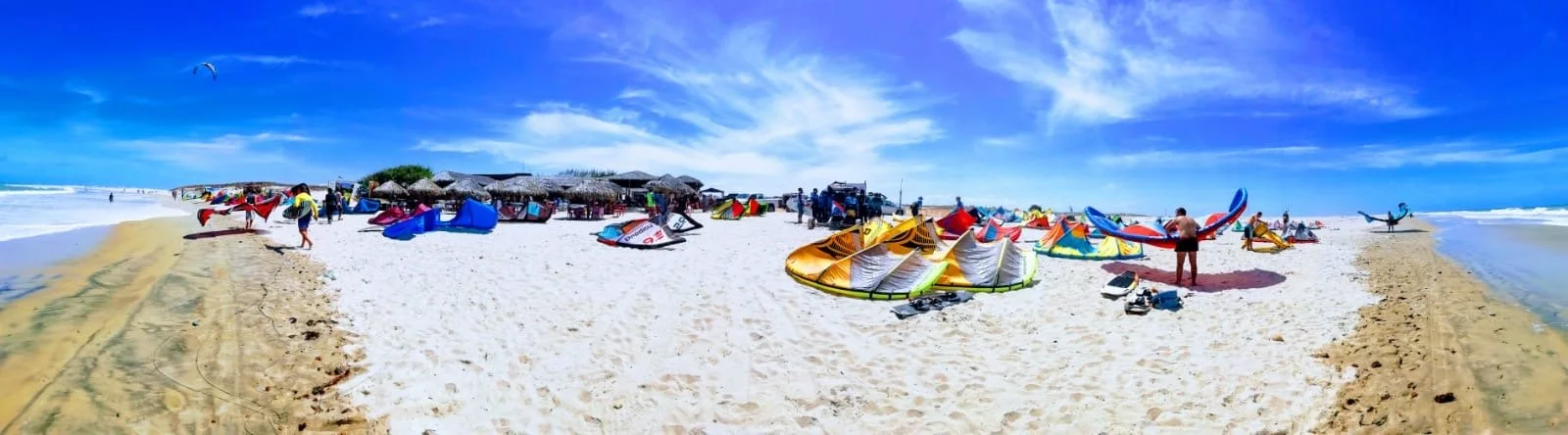
Brazil has it all. Flat water so shallow you can stand up anywhere, open ocean with chop and kickers, proper waves, river mouths, lagoons between the dunes and a wind that shows up most days like it is on a contract. The problem is not finding a good spot. The problem is that most people fly into Fortaleza, take a taxi to Cumbuco and never leave. They ride the same beach for two weeks and go home thinking they have seen Brazil. They have seen one beach. This guide covers the coast I know best, everything west of Fortaleza all the way to Atins, plus a few spots further away that deserve more attention.
Where does all that Brazil wind come from?
The short answer: the trade wind. A steady wind from the east and southeast blows across the Atlantic towards the equator all year, and in the second half of the year it gets stronger and more reliable along the coast of northeast Brazil.
Three things stack on top of each other here. First, the band of rain and calm air around the equator moves north from around July, which leaves the Brazilian coast in steady, dry trade wind. Second, the coastline of Ceará runs almost parallel to that wind, so on most beaches it blows side shore or side onshore. Third, the sun heats up the land and the dunes during the day, and that hot air rising pulls the sea breeze in even harder. That is also why the wind usually only shows up after breakfast. At night the land cools down, the extra push disappears and the morning starts soft. Once the sun has heated the land for a few hours, the sea breeze joins the trade wind, the wind builds in the late morning and peaks in the afternoon. I explain that night and day cycle in why the wind dies at night, and the bigger picture in how does wind happen.
The result is one of the most reliable kite destinations on the planet. Wind statistics for the Preá and Jeri area give October a windy day almost every single day.
When is the kite season in Brazil?
The season runs from July to January, with the strongest and most consistent wind from August to December. September, October and November are the safest bet if you only have one window.
From February the wind gets lighter and less reliable, and March to May is the rainy season. You can still get sessions, but you are gambling.
What you should know: the best wind and the biggest crowds arrive together. August and the first half of September are still fine. From mid September to the end of November it is packed, in the lagoons and on the beaches, with a lot of Europeans escaping the autumn at home. It is not as crowded as Cape Town, and it is a different crowd, but do not expect to have a lagoon to yourself in October.
For the full picture of where to go in which month, see best kitesurfing spots by month.
Which Brazil kite spot suits you?
| Spot | Water | Best for |
|---|---|---|
| Cumbuco | Ocean, chop, lighter wind | Big kites, foil, wing, all levels |
| Cauípe | Flat lagoon | Tricks, flat water |
| Taíba | Ocean and lagoon | Choice of both, quieter |
| Paracuru | Reef and waves | Wave riders |
| Guajiru and Flecheiras | Flat at low tide, reef | Quiet sessions |
| Icaraí and Moitas | Ocean, wide beach | Downwinder stop |
| Ilha do Guajiru | Flat lagoon, tide dependent | Freestyle, long runs |
| Preá and Jeri | Ocean, flat to kickers | Downwinders, village life |
| Tatajuba (Camocim) and Guriú | Flat lagoon, tide dependent | Flat water |
| Barra Grande | Shallow flat lagoon | Learning, freestyle, foil |
| Macapá | Flat and ocean | Lots of kiting, downwinders, nomads |
| Atins | River lagoon and ocean | All levels, the dunes |
Every spot on this coast has its pros and cons, and the right one depends on what you want out of a session. Flat water lovers end up in Cauípe, Ilha do Guajiru, Tatajuba, Barra Grande and Atins. Riders who want ocean and waves go to Taíba, Paracuru and Preá. And if you want both on the same day, Taíba, Macapá and Atins give you a lagoon and the open ocean within walking distance.
Is Cumbuco still worth it?
Yes. Cumbuco is the classic for a reason. It is 30 to 60 minutes from Fortaleza airport, it has kite schools, kite hotels and rental gear everywhere, and the wind is reliable from morning to sunset.
The ocean in front of the village gives you chop and small waves. The wind in Cumbuco is usually a lot lighter than further west, so this is where the bigger kites come out. It is also friendly to every discipline: foil, wingfoil, twintip and directional all work here. The downside is that everyone knows it. In peak season the beach is busy, the launch is busy and the water is busy. And on the weekends half of kiting Fortaleza comes as well. Theft of gear and valuables also happens here, so do not leave anything unattended on the beach or in a car.
Cumbuco is a great base for the first few days. Get your kite legs back, sort out a buggy driver, and then start looking further.
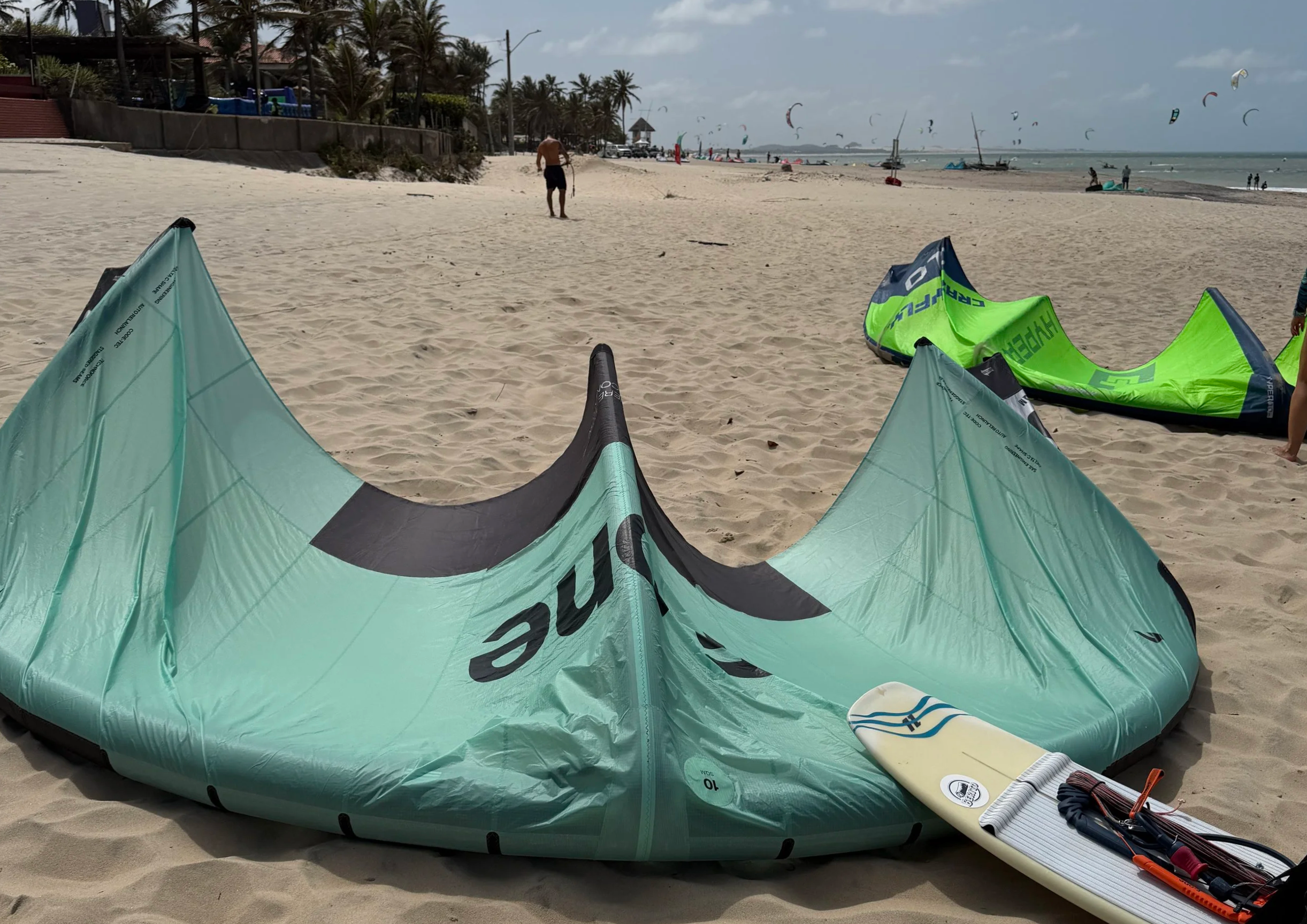
Why is Cauípe lagoon so popular?
Cauípe is the perfect flat water spot a little downwind of Cumbuco. You can get there with a short downwinder, by buggy or by taxi.
It is flat, warm and shallow, which makes it a dream for learning new tricks or just enjoying butter smooth water. Facilities are basic, a beach bar and not much else, so bring what you need for the day. Two things to know before you go. It gets crowded, especially in the afternoon. And the size of the lagoon depends on the water level, so late in the season it can shrink a lot.
Taíba, ocean or lagoon?
Next up is Taíba, about an hour and a half from Fortaleza. You get the choice here: head out into the ocean for chop and waves, or ride the lagoons for flat water.
Taíba is quieter than Cumbuco and has more of a village feel. It is a good stop if Cumbuco feels too busy but you do not want to drive far yet.
What about Paracuru, Guajiru, Flecheiras, Icaraí and Moitas?
This is the quieter middle stretch of the coast, and it is where you start to feel like you have the place to yourself.
Paracuru is the wave spot of the area, with a reef and real waves. Not the place for your first wave session if you are still nervous around the shorebreak, but a great one if you want something more than chop. Guajiru is known for flat water close to the beach at low tide, with a relaxed village behind it. Flecheiras is a pretty fishing village with reefs and rocks at low tide, so check the tide before you launch. Icaraí de Amontada is a wide beach in a small, calm village, and a popular overnight stop on downwinder trips. Right next to it is Moitas, another quiet stop on the way west and one of the places on my own route.
None of these spots will be in a big kite magazine any time soon, and that is exactly the point.
Is Ilha do Guajiru worth the trip?
Yes, if you love flat water. Ilha do Guajiru is a well known spot further west, with a lagoon behind a sand island that gives you flat, shallow water when the tide is right.
It is a favourite for freestyle riders and for anyone who wants long, smooth runs without chop. Like most lagoons here, it depends on the tide, so plan your sessions around it.
And the best part about this spot? The pousadas are literally at the lagoon. So jump out of your hammock, pump up the kite and jumpstart your session almost from the breakfast table.
What makes Preá and Jericoacoara special?
Preá is where you kite and Jericoacoara, or Jeri, is where you go out at night. The two are about 14 km apart, and the stretch between them is one of the most famous downwinders in the world.
Preá is a kite village built around one long, wide beach. The wind blows side shore to side onshore, the beach is sandy with no rocks, and the water changes with the tide. At low tide it is shallow and mostly flat to slightly choppy, and as the tide comes in you get kickers and small waves. In high season the wind is a lot stronger than in Cumbuco, and a 5 to 7 metre is often all you need. One thing to watch: beach buggies drive everywhere, and they do not always notice your lines, or you.
Jeri itself is different from most places on this coast. It is more remote and more special, a village literally built on a sand dune, with sand streets, a famous sunset dune and more restaurants than you will ever have time for. It is also the place to be for a party. Jeri is a protected area, and visitors who stay in the village pay a tourism fee. In 2026 that is R$ 41.50 per person for up to ten days, which you can pay online in advance or at the entrance. Most riders kite in Preá and ride or take a buggy back and forth.
Getting there takes some effort. Jeri is around 300 km from Fortaleza by road. You can take a transfer, a bus that changes to a 4x4 for the last stretch over the sand, or fly into the small Jericoacoara airport near Cruz.
Tatajuba, flat water with a catch?
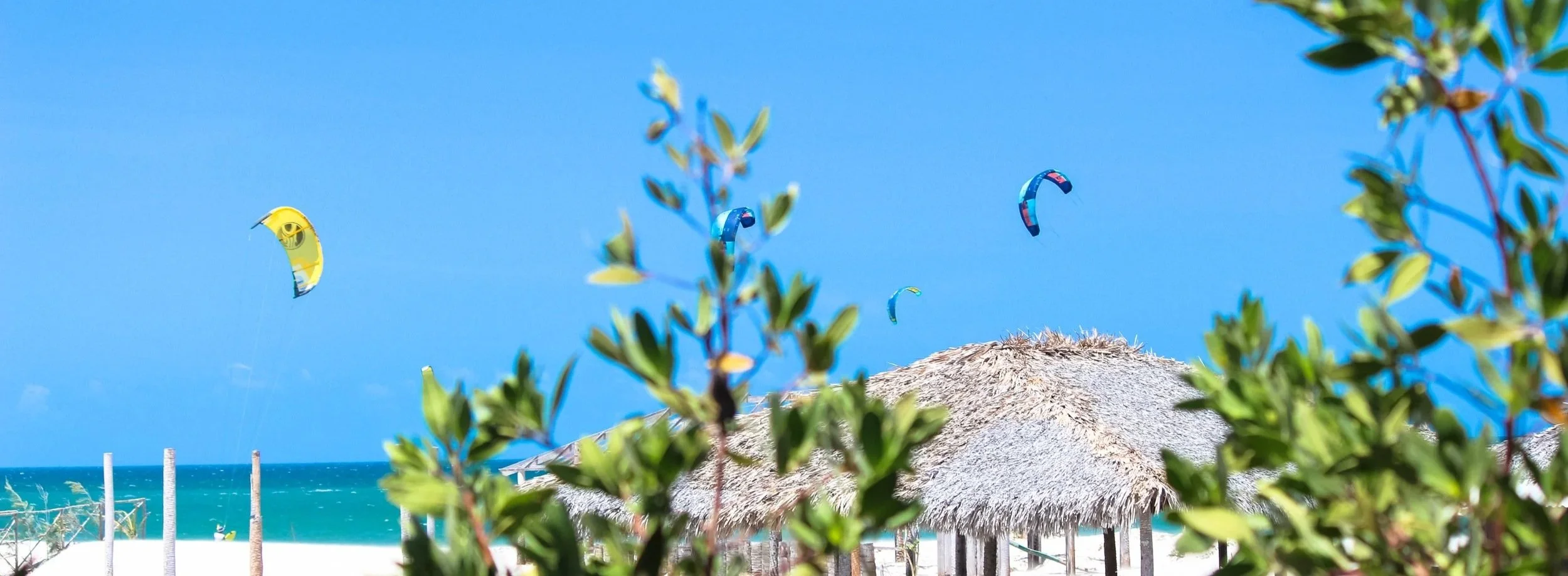
West of Jeri, near the town of Camocim, you find Tatajuba, another flat water lagoon and one of the prettiest on this coast. Nearby Guriú has a very flat lagoon too, popular with pros.
The catch with Tatajuba is the tide. At low tide the lagoon is tiny, at mid tide it is flat and perfect, and at high tide it gets choppier. Get your timing right and it is one of the best sessions of the trip. Get it wrong and you are standing in a puddle with a pumped kite.
What is Barra Grande like?
Cross the border into Piauí and you reach Barra Grande, a small village with a big, shallow lagoon in front of it. At low tide the water is flat and only knee to waist deep, which makes it great for learning, freestyle and foiling.
Barra Grande is more relaxed than Preá and Jeri, with fewer people on the water and a slower pace on land. It is a good place to stay a few days, ride every day and forget what day of the week it is. The closest airport is Parnaíba.
Why go all the way to Macapá?
Macapá is a bit more remote, and that is exactly why I love it. You get flat lagoons and the open ocean in one spot, so you can switch depending on your mood or the tide.
I really enjoyed it here. I kited a lot, both in the lagoons and on the ocean, and the downwinders are great fun. It is quite local and there is not much else to do, so if you need nightlife, go to Jeri. If you need wind, this is it.
It is also perfect for digital nomads. The wind usually only kicks in after breakfast, so you can get a few hours of work done in the morning and still be on the water before lunch. That goes for most of this coast, but in a quiet place like Macapá there is nothing to distract you from that rhythm.
Is Atins worth the long journey?
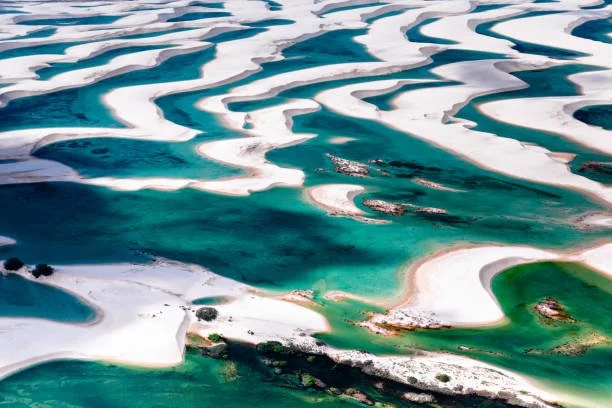
Yes. Atins is the end of the road, at the edge of the Lençóis Maranhenses national park, where white dunes and rainwater lagoons stretch as far as you can see.
You kite in a big lagoon where the Preguiças river meets the ocean. It is warm and flat, with sandbanks that move around, and it suits every level. Ride out past the lagoon and you get chop and waves on the ocean side. The wind season matches the rest of the coast, with the best months from July to December.
Or going into the park and kite between the white dunes. Definitely worth doing and don’t forget to take those insta-worthy shots in the meantime.
Getting there is part of the adventure. There are no roads into the park, so the last part is by 4x4 or boat from Barreirinhas, and connections do not always line up. Fly into São Luís, or come from Barra Grande or Jeri with a long day of transfers. Once you are there, you will not want to leave. So don’t make it a day trip but rather go for at least 3 days.
Can you kite the whole coast in two weeks?
Yes, and you should. Many people stay in Cumbuco for their whole trip, but why not visit more spots when you are already there? In two weeks you can ride the whole coast.
This is the route I did:
Cumbuco
Paracuru
Moitas
Ilha do Guajiru
Camocim, for Tatajuba
Macapá
Preá and Jeri, then back to Fortaleza
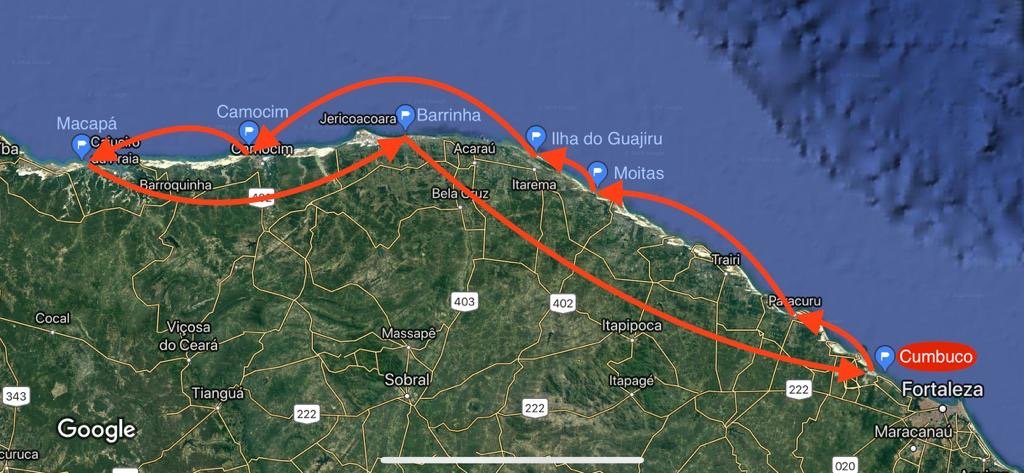
Getting around is easier than it looks. There are plenty of transfers and taxis between the spots. Once you are at a spot, a buggy or a quad is ideal. You can rent one yourself, or make sure you have a local contact who drives you.
If you only have two weeks of holiday, the best option is an organised downwind trip. Everything is arranged, a support car carries your luggage from stop to stop, and all you have to do is launch your kite.
What kite gear should you bring to Brazil?
Kite sizes on this coast vary a lot. Cumbuco is generally much lighter, so an 8 to 15 metre works fine there. Further west the wind picks up, and a 5 to 7 metre is often all you need. I brought my 6, 8 and 10, and that covered it.
A board for your discipline. Cumbuco suits everything, from foil and wingfoil to twintip and directional.
A surfboard if you want to ride Paracuru or the waves further east.
Shorts and a lycra. Even a shorty is almost too warm.
Good watersport clothing that covers your skin, because you will burn. A lot of good sunscreen and zinc for your face.
Spare lines and a repair kit, because the nearest kite shop might be a buggy ride away.
If you are still choosing your quiver, how to choose your next new kite helps, and for flying it all over there, read how to travel with kitesurf gear.
What should you know before you go?
Expect it to be busy. From mid September to the end of November the famous spots are crowded, on land and on the water. Give people space, stick to the right of way rules and be patient at the launch.
You can stay 90 days. As a European you can stay in Brazil for up to 90 days without a visa, which is plenty for a kite season.
Watch the buggies. They drive along the beaches, fast, and your lines are hard to see. Launch and land away from the buggy track.
Check the tide. Most lagoons and reefs on this coast change completely between low and high tide. A spot that is perfect at 10:00 can be unrideable at 15:00.
Look after your stuff. Petty theft happens, especially around Cumbuco. Keep an eye on your gear and do not leave valuables in a car.
Learn a few words of Portuguese. Kite hotels speak English, but buggy drivers and most locals do not. A translation app goes a long way.
Is Brazil more than this coast?
Much more. You can stick to the classic coast, but Brazil has plenty of other places that are ideal for kiting. I have not been to these yet, but I keep hearing good stories: Canoa Quebrada east of Fortaleza with its red cliffs and waves, São Miguel do Gostoso further east with waves and flat water, and Cabo Frio and Búzios in the state of Rio de Janeiro. They are on my list.
Brazil is calling
Brazil is not a secret, everybody knows the wind is good. What most people miss is how much coast there is beyond Cumbuco. Start there, get your kite legs back, and then follow the wind west. Flat water in Cauípe, ocean in Taíba, the downwinder from Preá to Jeri, lagoons in Ilha do Guajiru, Tatajuba and Barra Grande, both worlds in Macapá and the dunes of Atins at the end. If you have ridden South Africa too, it is a nice contrast: same reliable wind, but board shorts instead of a 5/4. More on that in my South Africa spot guide.
Two weeks, one coast, a lot of sunscreen. The wind takes care of the rest.
xox Berito
Quick answers
-
August to December, with September to November the most reliable. The season runs from July to January.
-
In Cumbuco an 8 to 15 metre works, as the wind is lighter there. Further west a 5 to 7 metre is often enough.
-
From mid September to the end of November. August and early September are calmer.
-
Cumbuco is easier to reach and great for your first days. Preá and Jeri have more space, the famous downwinder and a better village vibe.
-
No. The water is warm all year, so shorts, bikini and a lycra are enough.
-
Yes. Two weeks is enough to go from Cumbuco to Atins with stops at the main spots along the way.