
The truth about kiting in Tarifa
“Tarifa has two winds that could not be more different: steady, side onshore Poniente from the west and strong, gusty, offshore Levante from the east. Ride Los Lances in Poniente, Valdevaqueros in Levante, bring small kites and buy a rescue card before your first Levante session. It is a fun trip, but if you do not like offshore wind, gusts or crowds, it is not worth the hype.”
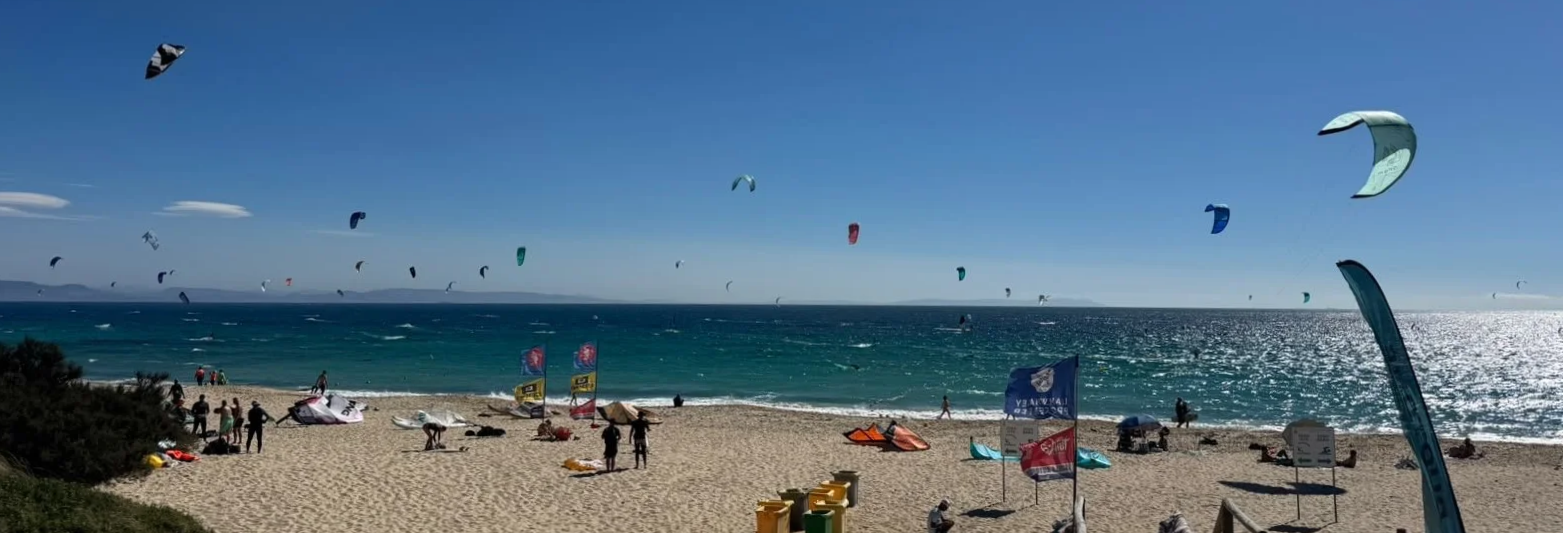
Every European kiter gets sold the same dream. Turquoise water, endless sand, tapas at midnight and pros boosting into the sky with the mountains of Morocco in the background. Kitesurfing in Tarifa gets pitched as the best Europe has to offer, with guaranteed wind and a cold drink at a beach bar after every session.
That version exists. I was in Tarifa in 2026 and I had some of those days. But there is another side that never makes it into the clips. Tarifa can be glorious, and it can also be gusty, crowded and exhausting if you show up unprepared. So before you throw three kites in a bag and book a flight to Málaga, here is what you need to know.
Why is Tarifa so windy?
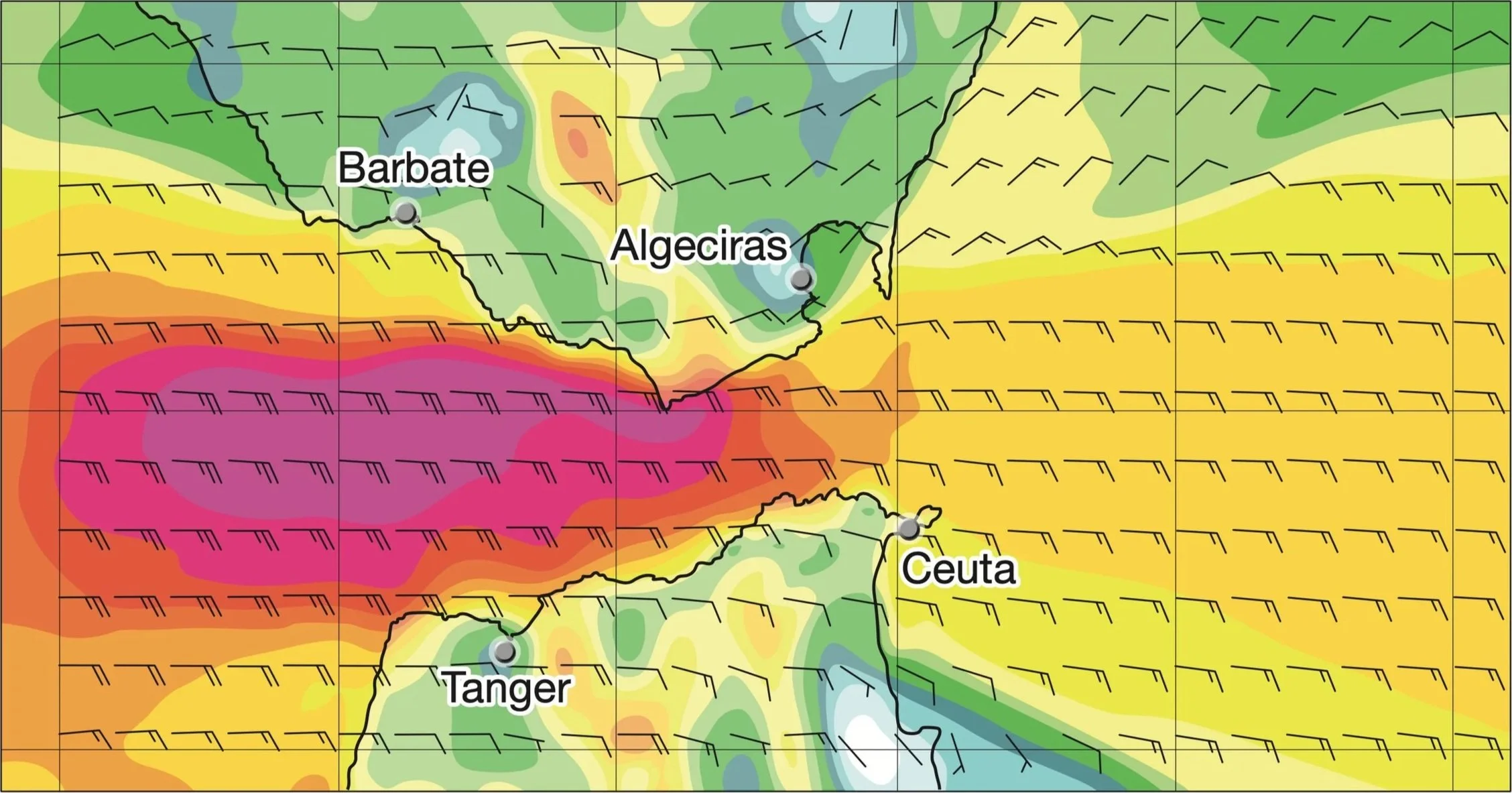
Because it sits at the narrowest point of the Strait of Gibraltar, where Europe and Africa are only about 14 km apart. Air moving between the Atlantic and the Mediterranean has to squeeze through that gap, and squeezed air speeds up.
It is the same thing that happens to wind between two tall buildings, and it is why Tarifa has wind when the rest of Spain is flat calm. I explain the effect in why are some places windier than others. The strait only lets the wind through from roughly east or west, which gives Tarifa its two famous winds.
What is the difference between Levante and Poniente?
Poniente blows from the west, off the Atlantic. Levante blows from the east, from the Mediterranean. Poniente is the friendly one. Levante is the one people tell stories about.
Poniente is cooler and blows side onshore on the main beaches. It usually sits between 15 and 25 knots, it is fairly steady, and it often brings some swell with it. When Poniente is running, Tarifa feels easy. The power is predictable and a mistake rarely gets punished straight away.
Levante is warm, dry and strong. It regularly blows 25 to 35 knots and can go well over 40. On most beaches it is side offshore to offshore, and it is gusty. The water close to the beach is flatter, which is great for speed and big air, as long as your board control and self rescue are completely sorted. Because the warm air is less dense, the lulls can feel lighter than the forecast and tempt you to rig bigger. Do not fall for it.
Which Tarifa kite spot works in which wind?
| Spot | Best wind | Level | Watch out for |
|---|---|---|---|
| Los Lances | Poniente | All levels | Shorebreak, summer zones |
| Los Lances lagoon | Poniente, high tide | Intermediate | No kiting in summer |
| Valdevaqueros | Levante | Intermediate and up | Crowds, rocks in the south |
| Balneario | Levante | Experts only | Offshore, no rescue, own rules |
| Palmones and Getares | Strong Levante | Intermediate and up | Narrow beach, rocks |
| Caños de Meca | Levante | Advanced, waves | Rocks, check the tide |
| Bolonia | Poniente | Intermediate | Small kite area |
Los Lances for Poniente, Valdevaqueros for Levante, and the spots outside town when Levante is too strong.
Los Lances is the long, wide beach running north from town, and it is the main spot. In Poniente it suits almost every level, and it is big enough to spread out. At high tide a small lagoon forms behind the beach, which is nice and flat for practising tricks outside the summer season.
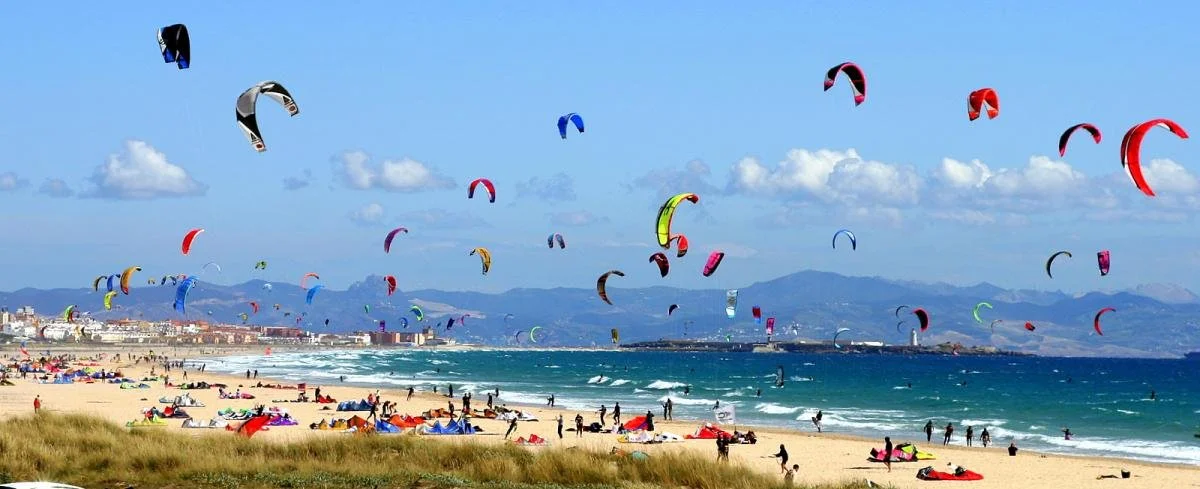
Valdevaqueros is further north, next to the giant sand dune. It is the classic Levante spot, because the headland of Punta Paloma takes some of the edge off. It is also the busiest beach in Tarifa, and there are rocks on the beach and under water at the southern end, so ask locally before you head that way.
Balneario, the beach right next to town, is strong offshore wind and experienced riders only. It has its own rules, and in the last year there has been quite a lot of discussion about who is allowed to ride there and who is not. If you are into big air, it can be a dream. But there is no rescue, so you have to rely on other kiters to help you out. Why have a stressful session there when you can go up the coast to spots with rescue and space?
When Levante gets too strong, usually above 30 knots, locals drive out of town. Palmones and Getares on the bay of Algeciras get the Levante onshore, with waves on a good day. Caños de Meca further west works for wave riding with the right tide. And Bolonia, a beautiful bay west of Tarifa, is a nice change of scenery on a Poniente day.
Can you kite anywhere in Tarifa in summer?
No. In high season, roughly mid June to mid September, the main beaches are split into swimming zones, kite zones and school zones, marked with buoys.
In summer the southern part of Los Lances is for swimmers, the lagoon is off limits and you launch and ride inside the marked kite zones. The exact dates and zones change, so check with a local school or shop when you arrive. Kiting outside the zones can get you a fine. Outside the season the rules are a lot more relaxed.
What is the catch with kiting in Tarifa?
There are three: the crowds, the shorebreak and the offshore wind. None of them are a reason to stay home, but all three are a reason to show up prepared.
The crowds. In July and August the sky above Valdevaqueros looks like someone emptied a bag of confetti. Schools, rentals, holiday riders and pros all share the same strip of water. If your kite control is shaky, a packed launch with lines crossing in every direction will spike your heart rate before you are even on the water. Know the right of way rules, give people space and be patient.
The shorebreak. In Poniente, Los Lances can have a dumping shorebreak, especially around mid to high tide. It loves to steal boards and hammer knees before you even get going, so check the tide before you go.
The offshore wind. This is the big one. In Levante the wind blows away from the beach, so if you crash and cannot relaunch, you drift out. Not along the beach, out. Tarifa has a rescue boat service that picks up kiters, and you can buy a rescue card in advance. Mine cost around 50 euros. Getting rescued without one costs you around 200. I would rather pay the 50 and feel safe. Before you go out in offshore winds, read offshore wind, sketchy or sendy.
How do you ride a gusty Levante day?
Rig for the gusts, not for the lulls. If the forecast says 25 knots with gusts of 40, the 40 decides your kite size. A kite that feels a bit small in the lull is annoying. A kite that is too big in a 40 knot gust is dangerous.
Check your quick release before you launch, every single time.
Edge with your back foot to absorb the gusts instead of getting yanked off your line.
Do not ride alone. Make sure someone on the beach knows you are out.
When a gust hits, push the bar out to depower. When the lull comes, do not pull the bar all the way in, or you will stall the kite and drop it. Keep it moving and keep it high. If you do go down, stay calm, stay with your kite and body drag back upwind towards the beach. More on this in gusty winds and how to actually ride them.
I had one of those days. Gusty Levante, a lot of kiters on the water and gustier than anything I had ridden before. I was on my 6 and went from moments of being overpowered to moments of almost sinking. Scary as hell, because I do not like offshore wind, even with my rescue card in my pocket.
When is the best time to kitesurf in Tarifa?
The main season runs from April to October. July and August are the most consistent and also the most crowded. May, June, September and early October are the sweet spot: good wind, fewer people.
Winter still gets wind, but it is more unsettled, with storms, rain, bigger swell and colder water. For how Tarifa compares to other spots across the year, see best kitesurfing spots by month.
What kite gear should you bring to Tarifa?
Small kites. Tarifa is not the place to arrive with only a 12 and a big board. A 5 to 8 metre gets a lot of use in Levante, and a 9 to 11 metre covers most Poniente days. My own travel quiver of a 6, 8 and 10 works well here.
Shorter lines if you have them. The kite reacts faster and the power is easier to manage in strong wind.
A wetsuit. The water is colder than most people expect, especially after a few days of Levante. A 3/2 in summer, a 4/3 in spring and autumn.
An impact vest and helmet for crowded zones and Levante days.
Spare lines and a repair kit, although Tarifa has more kite shops than bakeries if you forget something.
Is Tarifa worth the hype?
Honestly, I do not think so. Tarifa is nice, and it is easy to get to. You fly into Málaga, Sevilla or Gibraltar, rent a car and drive south. The whole town lives for wind, there are kite shops everywhere, and on a no wind day you have the old town, tapas or a ferry to Tangier.
Yes, the wind can be amazing. Yes, the tapas are great. But if you do not like offshore wind, gusty wind or crowds, and you want a bit of quiet on the water, this is not the place to be.
See you at Valdevaqueros
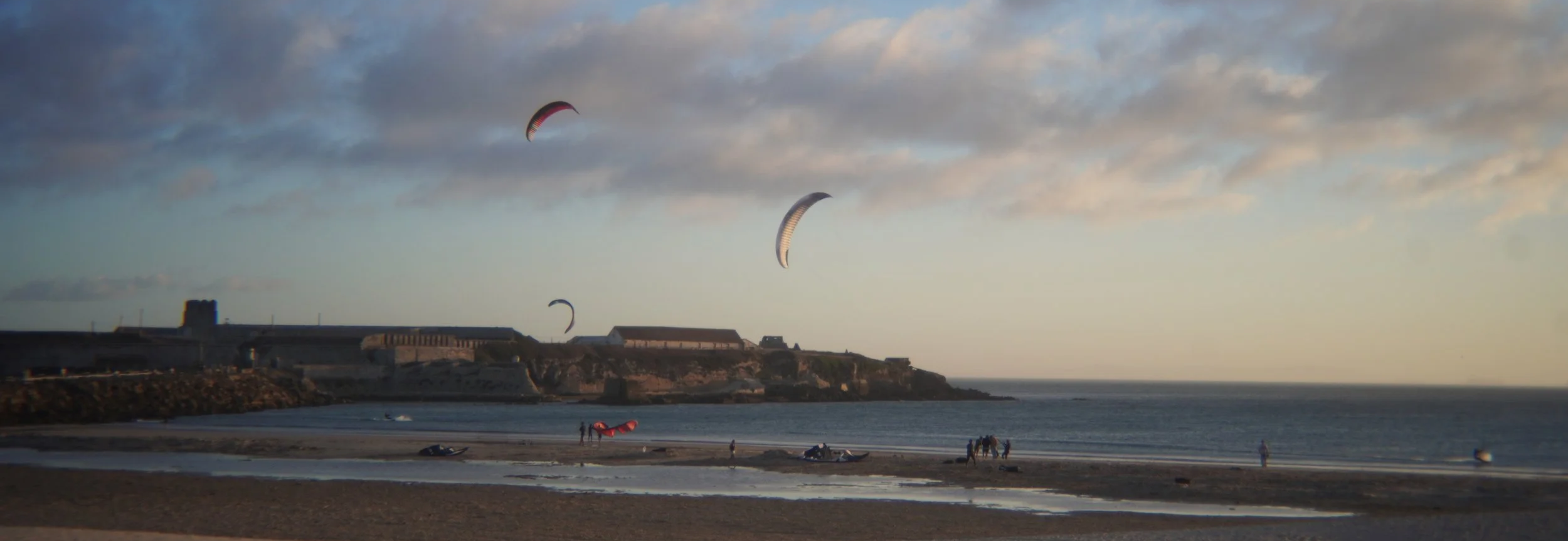
Tarifa is not a calm resort where the wind gently carries you across flat water. It is a dusty, windy, busy spot that rewards preparation and punishes bad habits fast. If you want to learn to handle real wind and you love big air, it will make you a tougher rider. If you would rather have steady wind, warm water and space around you, my Brazil spot guide is a better match. Either way, respect the zones, rig for the gusts and buy the rescue card.
You will also find Tarifa sand in your bag for the next three months.
xox Berito
Quick answers
-
Yes, in Poniente and with a school. Levante is offshore and gusty, so beginners should not ride it on their own.
-
Levante is a strong, warm, gusty east wind that blows offshore on most beaches. Poniente is a steadier, cooler west wind that blows side onshore.
-
April to October. May, June, September and early October give good wind with fewer crowds.
-
A 5 to 8 metre for Levante and a 9 to 11 metre for most Poniente days.
-
No. From roughly mid June to mid September you can only kite inside the marked kite zones.
-
It is smart to have one for Levante. A card costs around 50 euros, a rescue without one around 200.