
Stop guessing your kite size
“Your first kite size comes down to your body weight and the average wind at your local spot. Start bigger, start in lighter wind, and only add a smaller kite once you are riding with confidence.”
You just finished your kitesurfing lessons and you are officially hooked. Your bank account is trembling in fear, but you are ready to buy your very own gear. Standing in a kitesurf shop or scrolling through endless second-hand marketplaces is an overwhelming experience. Everyone throws different numbers at you. Some say you need a massive twelve metre kite, others swear an eight metre is all you will ever need. A friendly stranger on the beach will tell you to just get a nine.
Getting the size wrong is expensive. Too big and you are about to become a human kite yourself. Too small and you will be sitting on the beach watching other people ride. I have been exactly where you are. I stared at all those colourful canopies and had absolutely no idea where to start. Let me save you the confusion.
What kite size should a complete beginner actually start with?
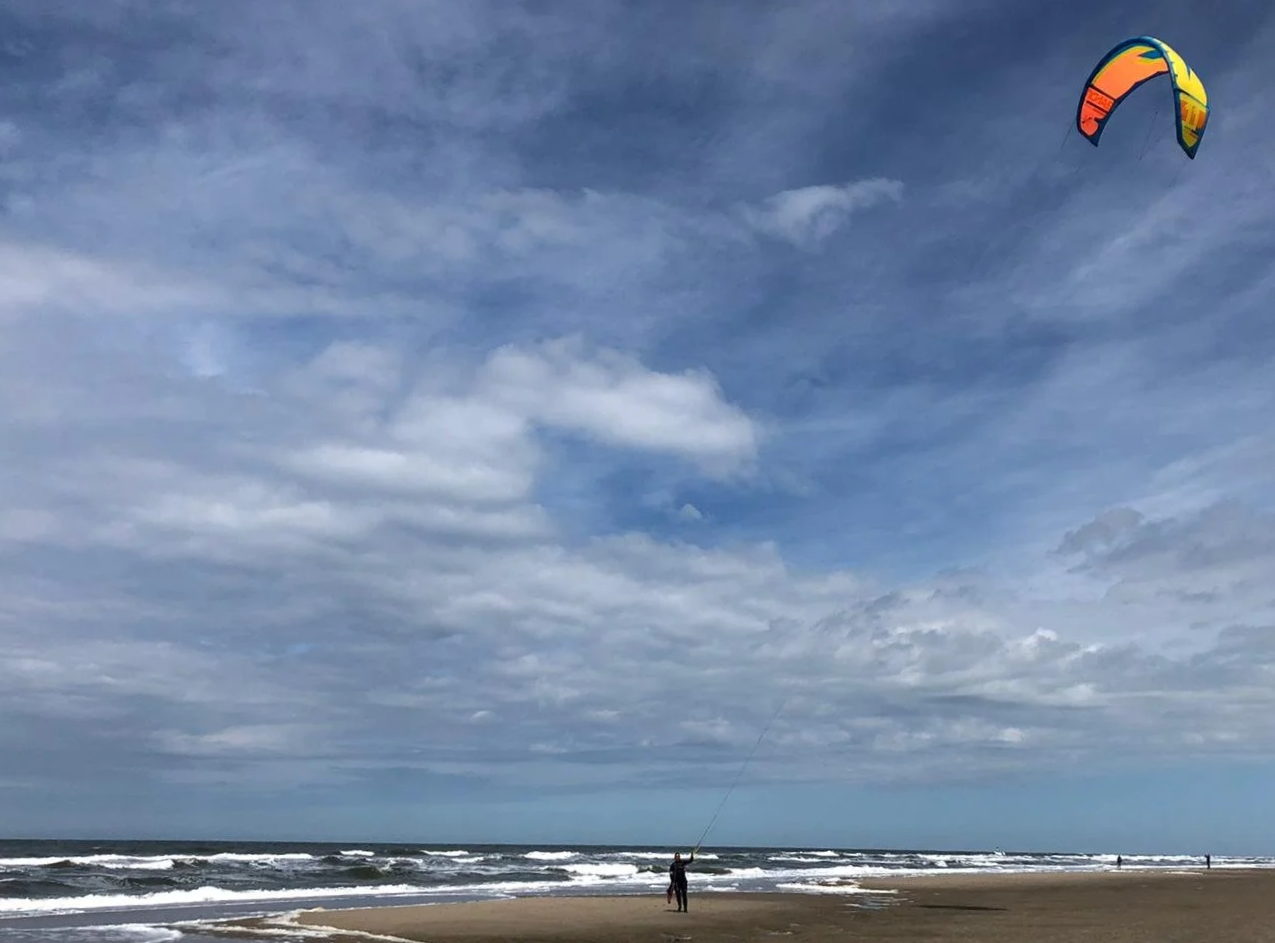
For most beginners in moderate wind conditions, a kite between 10 and 12 square metres is the safest starting point. Before you land on any number though, you need one piece of information first: what does the wind actually average at your local spot on a typical day. That answer changes everything that follows.
A bigger kite generates power in lighter wind, which gives you more time to think, react, and correct your mistakes before things go sideways. Lighter wind days are genuinely the best conditions to build your foundations. The kite moves slower, the pull is more predictable, and the consequences of a mistake are far more forgiving than in twenty-five knots of screaming coastal wind.
When I started, I went with an 11 metre F One Bandit as my first kite. My local spot runs 15 to 20 knots on average, and at my weight that size covered the lighter end of those days perfectly. It did not take long before I needed something smaller for when the wind picked up. The 8 metre came in the same year, and that became the kite I learned most of my progression on.
My first quiver was a 6 metre, 8 metre, and 11 metre, all F One Bandits. That three-kite range covered almost every condition I encountered. You do not need to build a full quiver on day one, but knowing where it eventually leads helps you buy the first kite with a plan in mind.
Start big: a 10 to 12 metre kite is slower, more forgiving, and ideal for learning
Know your wind first: the average at your local spot decides which size is actually useful
Lighter conditions: your first sessions should be in lighter wind where mistakes cost less
Plan ahead: buy your first kite knowing a smaller one will follow
How does your body weight change your kite size?
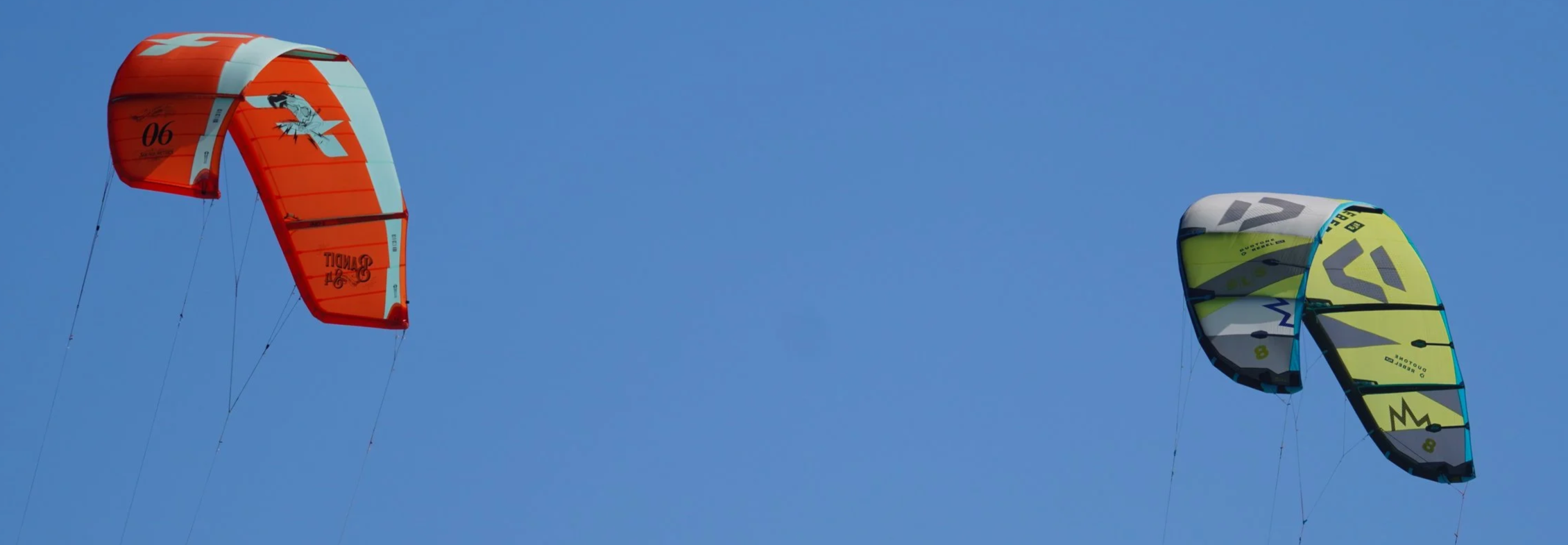
Your body weight is an important factor in kite sizing. A 90 kilogram rider and a 60 kilogram rider are two completely different aerodynamic problems, and the same kite will behave entirely differently for each of them.
There is a rough formula that gives you a ballpark starting point: take your weight in kilograms, divide it by the wind speed in knots, and multiply by 2.2. For a 70 kilogram rider in 18 knots, that gives you approximately 8.5 square metres. It is not a law of physics, but it gives you an honest working number. Combine that with your local wind average and you have a real starting point, not a guess. Check out the table in our how to choose the right kite size.
The more important principle is this: as a beginner, always lean toward being slightly underpowered rather than overpowered. Being underpowered means you sink back into the water and struggle to get moving. Annoying, but safe. Being overpowered means the kite is pulling harder than you can handle, and the sky starts looking like a real option. One of those situations is a bad session. The other ends up in a hospital or at minimum a very embarrassing video on someone's phone.
Weight first: your body weight determines your kite size more than any other single factor
Use the formula: weight (kg) divided by wind speed (knots) multiplied by 2.2 gives a rough starting size in m2
Add your wind: combine your weight with your local average wind to get a real working number
Lean underpowered: slightly too small is always safer than slightly too big for a beginner
Why does your local wind come before everything else?
You cannot choose a kite without knowing your spot. The average wind speed at the beach where you will spend ninety percent of your sessions dictates which kite size will actually get used and which one will sit gathering dust in your garage.
If your local spot consistently delivers 15 to 20 knots, a 9 to 11 metre kite covers your core range as a beginner at average weight. If the wind typically runs lighter around 12 to 15 knots, start at 12 metres or even larger. If your beach is known for 25-plus knot days, a 7 or 8 metre might be your most practical kite, but those conditions are not where beginners belong yet.
The smartest research you can do before buying is talking to the riders coming off the water at your spot. Ask what sizes they are flying. Check historical wind data on an app like Windy to understand the typical range across the full year and not just on the day you happened to visit when the sun was out. Local kite schools always know which sizes sell well locally for a very good reason.
Know your spot: local average wind speed is your starting point before you look at anything else
15 to 20 knots: the most common coastal range, a 9 to 11 metre kite covers this well at average weight
Talk to locals: riders at your spot know what size works there better than any online guide
Use Windy: check historical wind data for your beach across the full year, not just peak season
How does your board size change what kite you actually need?
Your kite does not work alone. It works in direct partnership with your board, and the size of your board changes how much power you need to get riding.
A large, wide, floaty beginner board acts like a paddle on the water. It generates lift early and gets you planing at lower speeds. A small rockered freestyle board requires significantly more power and speed before it even thinks about getting you up. This is exactly why your instructors put you on enormous boards during lessons. The big board compensated for developing kite control and gave you every possible advantage to get on the water.
If you buy a smaller board because it looks impressive in photos, you will need a bigger kite to compensate for the power deficit. That combination is backwards for someone still learning. Buy a board that is slightly larger than you think you need, and it will work with your kite size rather than against it. For a detailed look at choosing the right twintip to pair with your first kite, see our twintip guide.
Big board equals less power needed: a wide beginner board gets you planing with less kite pull
Small board equals more power needed: forces you into a larger kite or more wind to get moving
Buy slightly bigger: a larger board is more forgiving and pairs well with a moderate kite size
Downsize later: reduce board size as your technique and edge control improve, not before
What should you research before buying second-hand?
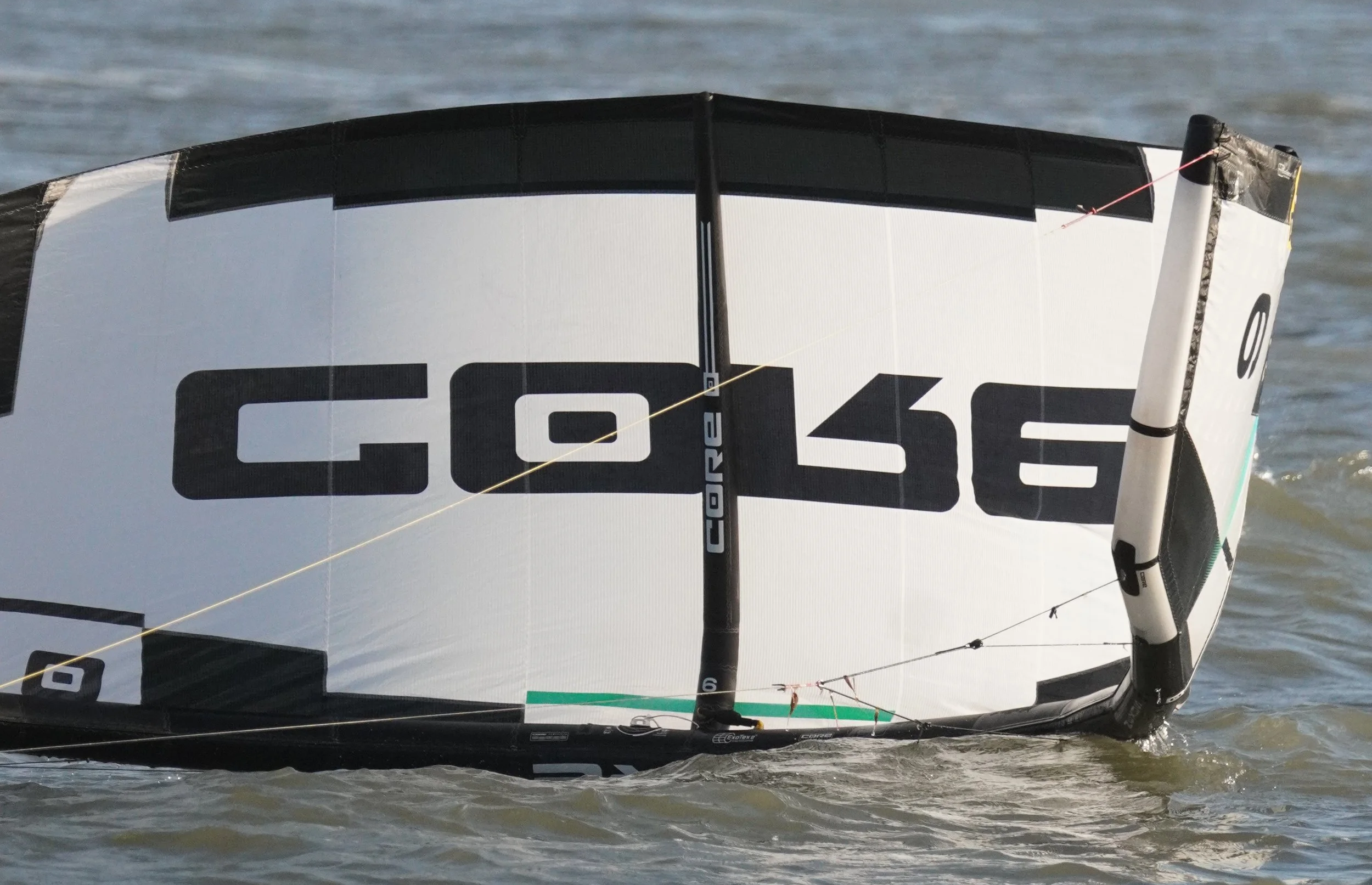
Before you open a single second-hand listing, spend an hour researching which kite models are actually built for beginners and allround riding. Knowing the names before you start searching means you can spot a good deal immediately and avoid getting sold something impressive-sounding that was built for experts.
Some solid beginner and allround kite models worth researching before you buy: F One Bandit, Cabrinha Switchblade, North Reach, Duotone Evo, Core Section, Ozone Edge. These are forgiving, widely used, and well supported with spare parts and repair resources. If a listing name does not ring any bells at all, look up the model before you contact the seller. Five minutes of research saves you from accidentally buying a C-shape kite that will make your first sessions genuinely dangerous.
C-shape kites are the older design that dominated kitesurfing before modern bow and hybrid kites arrived. They are explosive, reactive, and have a very narrow depower range. When the kite pulls, it pulls hard and there is not much you can do about it. They were designed for aggressive competition freestyle riding by experienced riders. As a beginner, a C-shape kite is not just challenging, it is genuinely risky.
What you want is a bow kite or a hybrid kite. These designs have wide depower capability. When you push the bar away, the kite loses power quickly, which is exactly the safety margin you need when you are still learning. They also relaunch from the water far more easily, which matters a lot when you are dropping your kite every few minutes in your early sessions.
Beyond the shape, always check the age of any second-hand kite carefully. Kites older than five years may have degraded bladders, worn safety systems, and canopy material that has lost structural integrity. A broken quick release in an emergency is not a gear problem, it is a safety crisis. Check that everything works before you hand over the money. You can find relevant safety standards at the International Kiteboarding Organization.
Research first: know the names of beginner and allround kite models before you start searching listings
Avoid C-shape kites: explosive, hard to depower, and built for experienced riders not beginners
Buy hybrid or bow: wide depower range and easy water relaunch, forgiving and safe
Check the age: avoid kites older than five years, safety systems and bladders degrade
Test the quick release: make sure it actually works before any money changes hands
For a longer look at the gear decisions that slow progression down, see: gear mistakes that kill your progress
Do you actually need three kites before you start?
No. You need one kite that suits your weight and your local wind. Everything else comes later.
The two or three-kite quiver is where you eventually end up once you are riding consistently and you understand your own needs on the water. It is not where you start. Starting with one solid kite that matches your conditions gives you focused sessions in a predictable wind range. That consistency builds your technique faster than jumping between wildly different sizes before you have real hours on the water.
My progression went from an 11 metre to adding the 8 metre the same year once I was riding confidently, and the 6 metre came later for strong wind days.
When you are ready to think beyond your first kite and look at building a proper quiver, how to choose your next new kite covers the decision process in detail.
One kite first: start with a single kite matched to your weight and local wind
Quiver comes later: add a second size once you are riding confidently, not before
Buy previous year: last season's models ride identically and cost significantly less
Consistency wins: focused sessions in a predictable wind range build technique faster than variety
The most expensive kite on the beach will not stop you from crashing into the waves. Get the size right, get on the water, and drink a lot of saltwater while you figure the rest out.
xox Berito
Quick answers
-
Start between 9 and 12 square metres depending on your body weight and local wind. When in doubt, go one size larger rather than smaller.
-
Divide your weight in kilograms by the wind speed in knots and multiply by 2.2. It is a rough guide, not a law, but it gives you an honest starting number.
-
A hybrid or bow kite in a size matched to your weight and local wind. Avoid C-shape kites entirely until you have significant experience.
-
Yes, but research beginner-friendly models first and stick to hybrid or bow designs from reputable brands. Always check that the quick release works before handing over money.
-
A larger board generates lift earlier and needs less kite power to get you moving. Start with a bigger board and it will make your first kite feel far more manageable.
-
One. Get the size right for your weight and local wind, and add a second kite once you are riding confidently.