
“The north coast of the Dominican Republic has warm water, steady trade wind and one of the best freestyle scenes in the world, centred around Cabarete. Kite Beach gives you chop, reef and waves, and La Boca gives you flat water a short drive away. Summer is the strongest and busiest season, so bring patience for the launch, a quiver for lighter spring days and cash for everything else.”
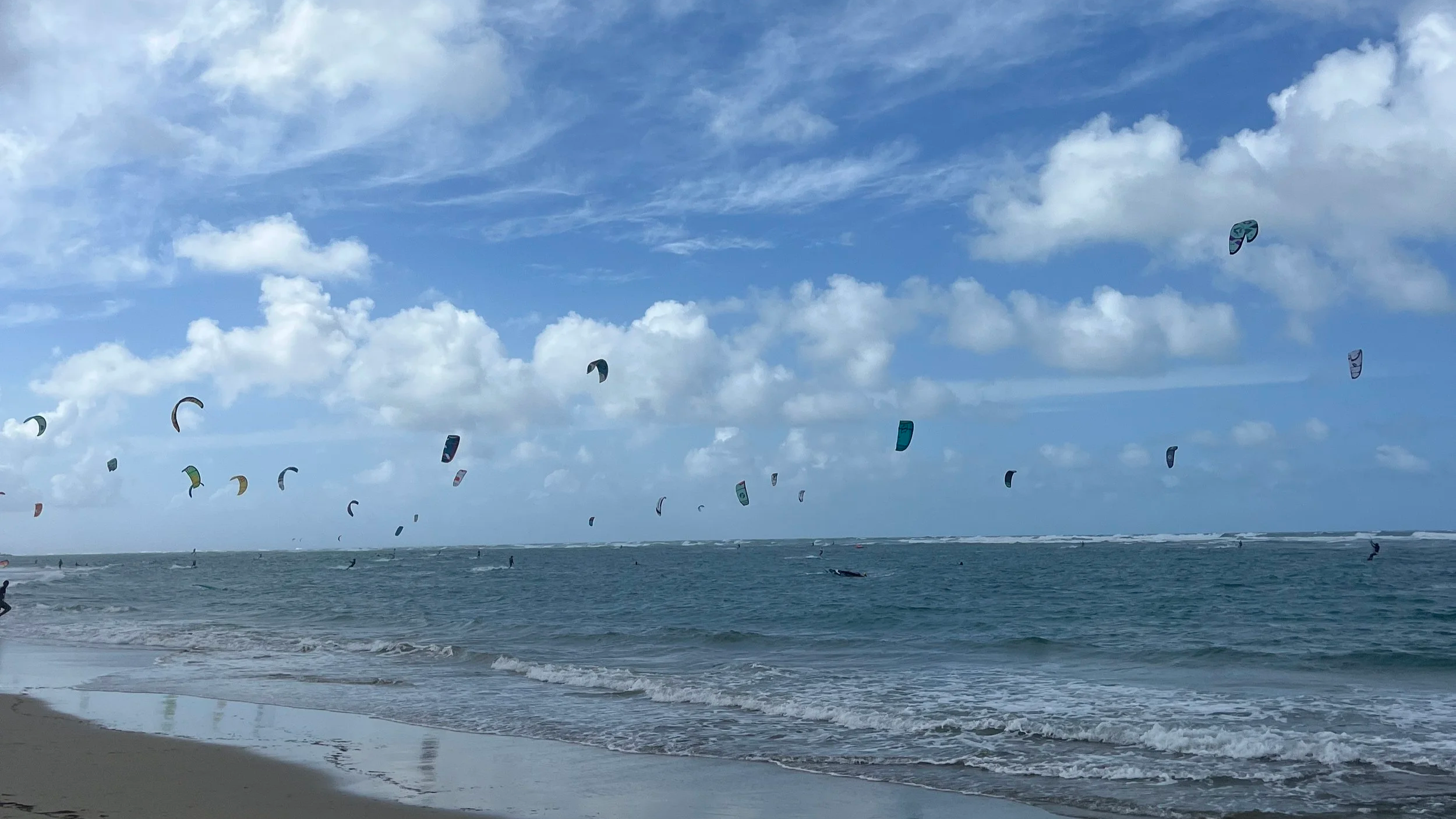
Most people know the Dominican Republic from the brochure. All inclusive resorts on the south and east coast, a wristband for the buffet and cocktails by the pool. Kiters know a different version. On the north coast, a small town has been one of the big names in the kite world for years, and when the trade wind is on, you understand why. The water is warm, the wind builds every afternoon and the level on the water is so high that you will see more handle passes in one session than in a whole summer at home. I rode at Kite Beach and La Boca, and even with the crowds, the traffic and a beach that shrinks to almost nothing in summer, it is still an amazing place to kite. Here is what you need to know before you book.
Where do you kitesurf in the Dominican Republic?
Almost all the kiting happens on the north coast, around the town of Cabarete, about half an hour from Puerto Plata airport. The bay is lined with kite schools, shops and bars, and within a few kilometres you can choose between chop, reef waves and flat water.
Kite Beach, just west of town, is the main spot and the one most riders end up at. Bozo Beach, in front of town, has more space but more chop and gustier wind. A short drive away is La Boca, a river mouth with flat water that the pros love. And if you are into waves, Encuentro further west is one of the best known surf spots in the Caribbean, with a reef break for riders who know what they are doing.
Want to combine them all? Do a downwinder from La Boca to Encuentro. I highly recommend it.
Want to explore further? Buen Hombre in the far north west and Las Terrenas on the Samaná peninsula are both known for flat water and a lot fewer kites. They take a bit of planning to reach, which is exactly why they are quiet.
There are a lot of kite schools along the bay, and many of them are really good. Even if you do not need lessons, it is worth checking a few out for storage, a spot on their part of the beach and local advice on where the wind is best that day.
| Spot | Water | Level | Watch out for |
|---|---|---|---|
| Bozo Beach | Choppy, lots of space | All levels with a school | Gusts, windsurfers near town |
| Buen Hombre | Flat water behind the reef | Intermediate and up | Remote, long drive, few facilities |
| Encuentro | Reef waves | Advanced, waves | Rock shelf, heavy winter swell |
| Kite Beach | Chop inside, reef waves outside | Intermediate and up | Tiny summer beach, crowds, reef |
| La Boca | Flat river mouth | Intermediate and up | Small launch, beach break at the mouth |
| Las Terrenas | Flat water | Intermediate and up | About 3 hours from the north coast spots |
When is the kite season in the Dominican Republic?
The trade wind blows for a large part of the year, with around 250 windy days in a good year. The strongest and most consistent wind comes from June to August, usually between 16 and 30 knots. December to March is a great second season, often around 20 knots, with fewer people on the water and a bit more room on the beach.
Spring can be lighter. I was there in April, and some days were soft enough that a bigger kite or a foil would have been the better choice. October and November are the weakest months, with less wind and more rain. The rain on the north coast usually comes in short, heavy tropical showers rather than grey days that last all week, but a dark cloud can bring a squall with it, so get off the water before it arrives. Also keep in mind that the Atlantic hurricane season runs from June to November. Most summers pass without trouble, but keep an eye on the forecast before you book and while you are there.
The wind itself is a thermal on top of the trade wind. Mornings start lighter, and as the land heats up, the wind builds and peaks in the afternoon. The same thing happens in Brazil, and I explain why in why the wind dies at night. To see how the Dominican Republic fits into a full year of kite trips, have a look at best kitesurfing spots by month.
Is Kite Beach still worth it?
Yes. Kite Beach is built in three layers, and that is what makes it so much fun. Close to the beach you have chop, which is fine for freeriding and warming up. Further out, in the middle of the bay, sits the reef. And behind the reef the waves break, which is where the real playground starts. The wind blows side onshore from the right, so if something goes wrong, you drift back towards the beach instead of out to sea. Just know where the reef is before you head out, because it does not forgive a bad fall.
What stood out most for me was the level. Kite Beach is a freestyle spot, and everywhere you look someone is throwing a handle pass, a kiteloop or something you have only seen on Instagram. If you want to progress, riding next to people like that is the best motivation there is.
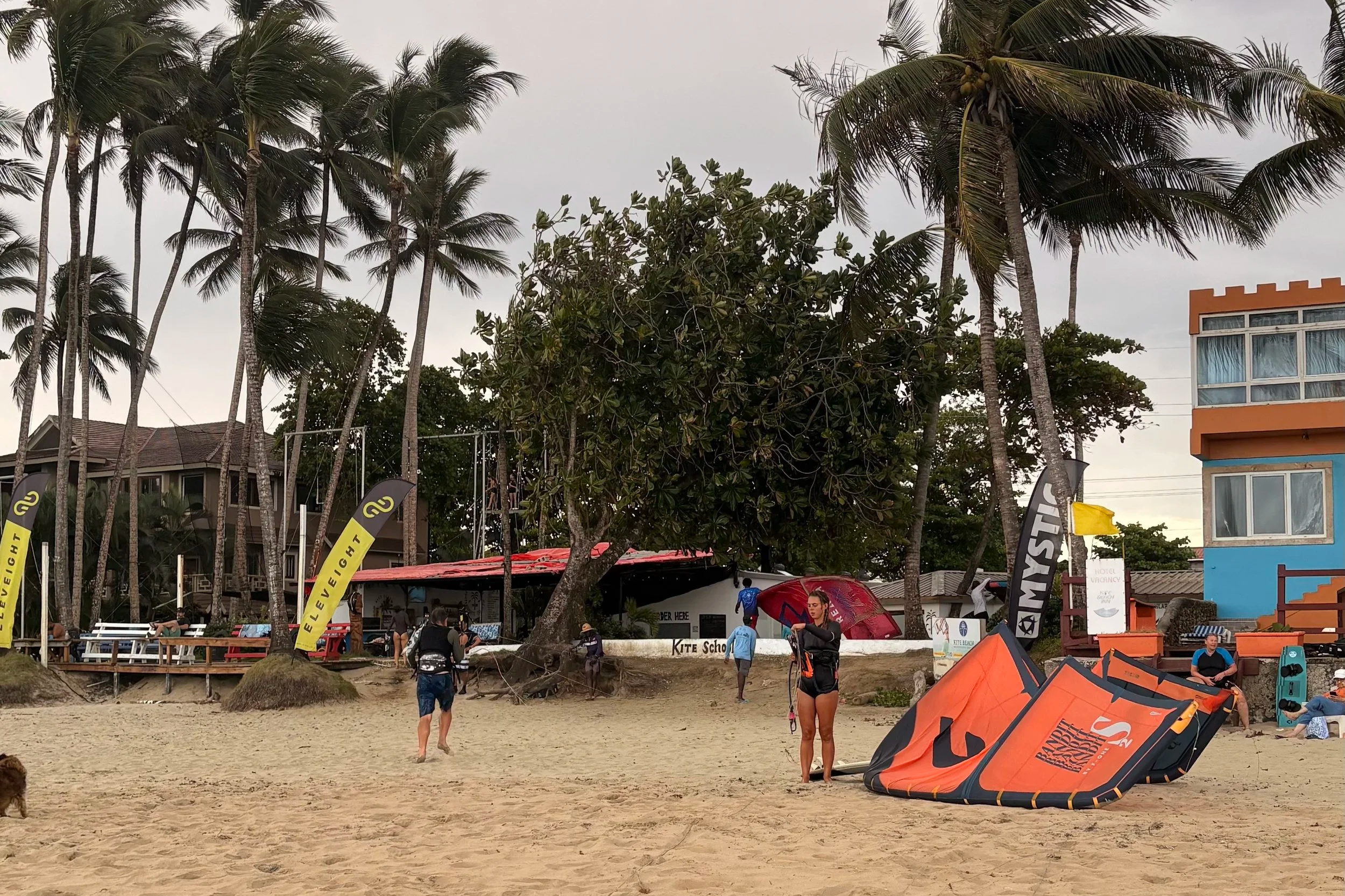
The catch is summer. The strongest wind brings the most people, and at the same time the beach washes away until there is barely any sand left. Launching and landing become the hardest part of your session, with dozens of kites fighting over a narrow strip. Bring a partner who knows what they are doing, keep your lines away from everyone else and wait your turn. If you are not confident in a tight space, book storage at one of the schools and ask their staff to help you launch and land. Riding early or around lunchtime also helps, because the wind and the crowd both pick up in the late afternoon.
Why is La Boca so popular with pros?
Because the water is butter flat. La Boca is the mouth of a river where it meets the sea, about 15 minutes by car from Kite Beach, and on the inside there are no waves and hardly any chop. That makes it the perfect training ground for freestyle, and on a good day half the riders on the water look like they are filming for a sponsor.
The wind comes side shore from the left, and the spot opens up towards the river mouth. The launch area is the weak point. It is small and gets crowded fast, so the same patience you need at Kite Beach applies here. At the mouth itself there is a beach break, so stay on the inside if you came for the flat water. You will need a car, a driver or a school trip to get there, but it is worth it. Compared to the chaos of Kite Beach, it feels calm and focused.
Which kites work best in the Dominican Republic?
You want something for the strong afternoons and something for the softer days. I used my 10 and my 8 a lot, with the 8 doing most of the work when the wind was on. On the lighter days, like some of mine in April, I would have loved a bigger kite or a foil.
An 8, 10 and 12 covers almost every day on a twin tip
A foil and a foil kite turn the lighter spring days into some of the best sessions of the trip
A rash vest or shorty and plenty of sun protection, because the water is warm all year
An impact vest and helmet for the crowded launches and for riding near the reef
Spare lines and a repair kit, although there are plenty of kite shops along the bay
For getting your quiver there in one piece, read how to travel with kitesurf gear.
What should you know before you go?
Fly into Puerto Plata (POP), which is about 30 minutes from the kite spots. Santiago is around 90 minutes away, Santo Domingo around 4 hours and Punta Cana around 6, so do not let a cheap flight to Punta Cana fool you into a full day in a car.
Getting around is an adventure, but a decent one. People drive like crazy. Motorbikes overtake on both sides, nobody seems to use indicators and a whole family on one scooter is completely normal. It is not a reason to stay away, it is just a place where you keep your eyes open and take your time. You have a few options:
Rent a car if you want to visit other spots, like La Boca or the quieter beaches further away.
Motoconchos, motorbike taxis, for short trips along the main road. Cheap and fast, with no helmet and your heart in your throat.
Guaguas, local minibuses that stick to the main road. Very cheap, and easier if you speak a bit of Spanish.
Taxis from the airport, or a transfer arranged by your accommodation or kite school.
So either you get a car, or you figure out how to reach the other spots before the wind is on.
And get cash. Motoconchos, guaguas, small beach bars and local food spots want Dominican pesos, and many of them do not take cards. There are ATMs in town, so take out enough in one go. Kite schools and bigger restaurants usually take cards or US dollars, but you often get a better deal in pesos.
Is the Dominican Republic worth it for kitesurfing?
Yes. Warm water, steady trade wind, reef waves, flat water a short drive away and some of the best freestyle riders in the world right next to you. It is not a quiet hidden spot, and in summer it can feel like the whole kite world showed up on the same strip of sand. But if you sort out your transport, bring cash and stay patient on the beach, it gives you sessions you will be talking about for a long time.
Trade wind and pesos
Go in winter if you want space, go in summer if you want power and do not mind fighting for a spot on the sand. If you prefer empty lagoons and long downwinders instead, my Brazil spot guide has plenty of them. And if you would rather stay closer to home and do not mind gusts, read the truth about kiting in Tarifa first.
Just do not count on paying for that motoconcho with your card.
xox Berito
Quick answers
-
The north coast has most of them, with Kite Beach for chop, reef and waves and La Boca for flat water. Buen Hombre and Las Terrenas are quieter flat water options.
-
June to August for the strongest wind, and December to March for good wind with fewer people.
-
Yes, with a school. There are many good ones, but crowded launches and reefs make it hard to ride on your own.
-
An 8 and a 10 cover most days, and a 12 or a foil helps on lighter spring days.
-
Puerto Plata is the closest to most of the spots. Santiago, Santo Domingo and Punta Cana also work, but you have a longer bus, taxi or car ride ahead of you.
-
Yes. Motoconchos, guaguas and small local spots want Dominican pesos.