
Start on a directional board
“Starting on a directional is far less complicated than the beach makes it look. Almost any directional will do for your first sessions, the kite you already use is the right kite, and the thing that decides whether it works is not gear at all but how often you leave the twin tip at home. This is the bit nobody explains, so here it is.”
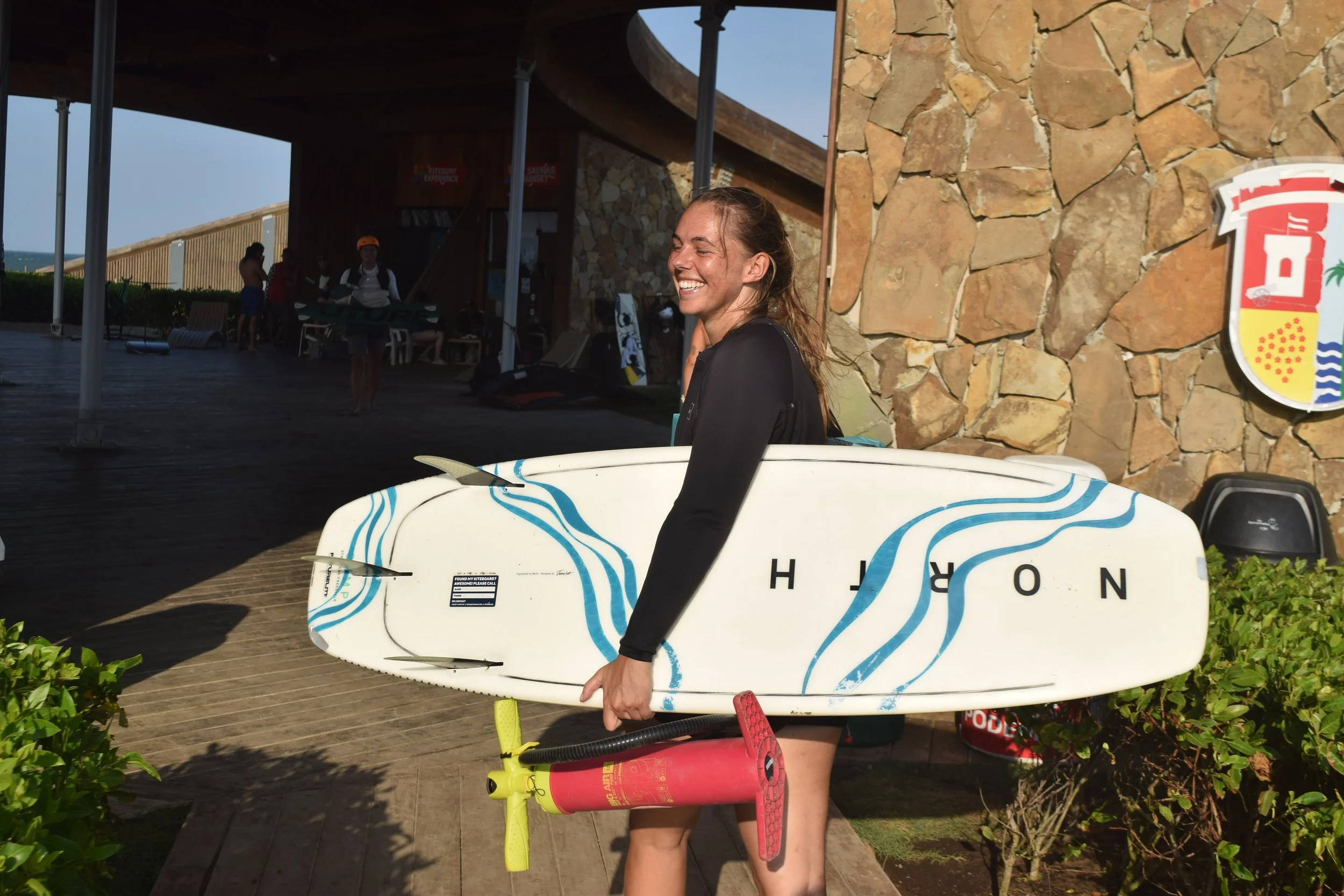
You have spent years locking in your heel edge, boosting off kickers and riding both directions without ever once thinking about where your feet are. Then you watch someone drop down the face of a clean swell on a directional, carving with all that flow, and you think: how hard can it be?
Here is the honest answer. The board is not harder. The board is different, and the difference removes almost everything a twin tip was doing for you. You get real volume under your feet, fins that grip, a nose that insists on going first, and nothing at all holding you to the deck. The first sessions feel like week one all over again, which is exactly why so many riders try it twice and go back.
I meet these riders constantly. Someone walks past my board on the beach, asks a few questions, says they have been thinking about it for two seasons, and then never does it. Not because directional riding is hard, but because nobody ever tells them where to begin. That gap is what this post is for. Not what a directional board is, that already exists, and not why I chose one. Just how to actually get on one.
It does not matter which board you start on
This is the excuse I hear most, and it is the weakest one. People wait for the right board and end up waiting for years.
Any directional gets you through the first sessions. Yes, some help far more than others, and I will get to that. But the board you borrow at the beach this weekend teaches you more than the perfect board you order next spring.
A normal surfboard is fine for a session. It will teach you the feeling, and that is all you need on day one. What it will not do is last, because surf construction is built for paddling loads rather than for a rider being dropped onto it with a kite pulling. Ride a friend's for an afternoon, absolutely. Buy one as your learning board and you will be repairing it before you can ride it.
Volume is your friend at the start, which feels wrong to everyone coming off a twin tip. More volume means the board floats you during water starts, planes earlier, and stays predictable when the kite is not fully powered. A small, thin, freestyle shape does the opposite of all three. Nothing sinks a first session faster than a board that sinks.
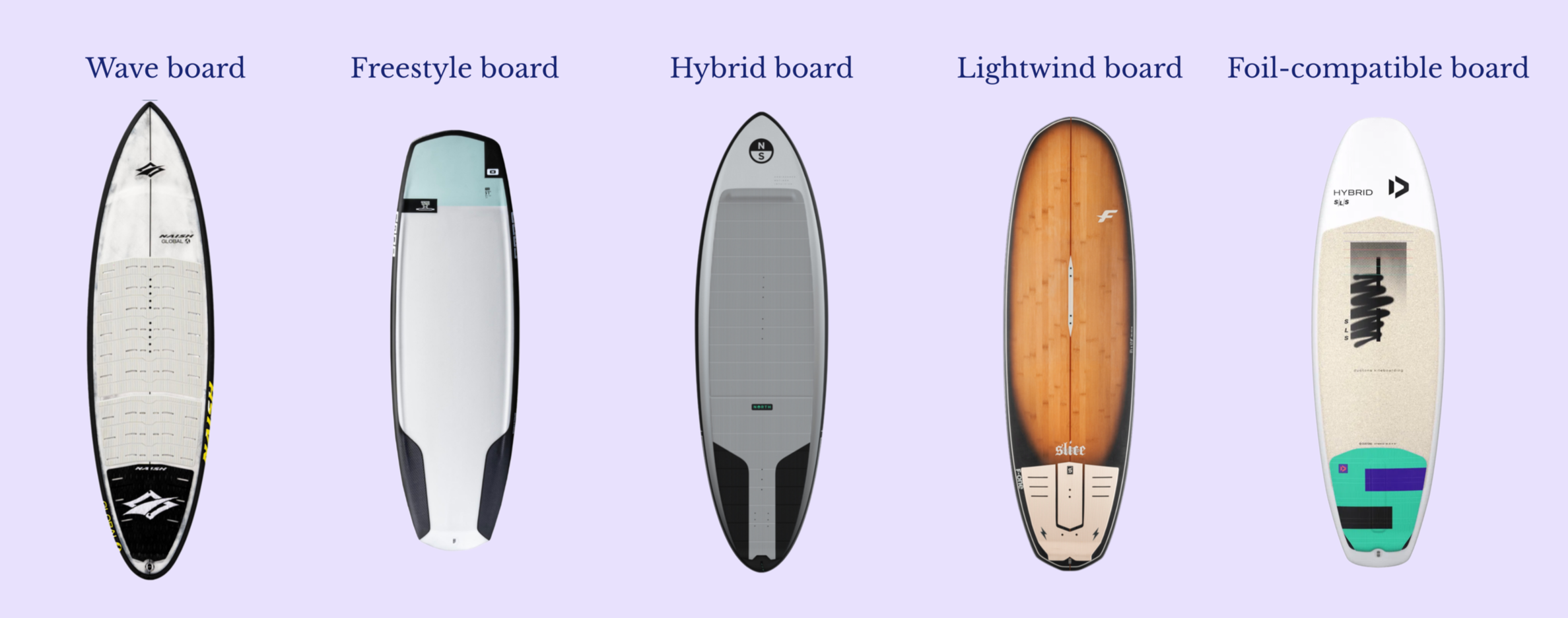
Wave boards are a good place to land. They are stable, they are forgiving, they are built for kite loads, and they are not sketchy. They can feel a bit sluggish once you know what you are doing, but sluggish is exactly what you want while you are learning to stand on something with no straps. If you want the technical version of why shape changes all of this, directional boards explained covers it.
Ask around before you buy anything
Before you spend a cent, ask at your spot. Just ask.
I know an uncomfortable number of people who tried a directional, bought one, rode it twice and left it in the garage. Those boards exist at every beach in the country. People are usually delighted to lend one, partly because it justifies the purchase they regret.
This is also the fastest way to find out what you actually want. One afternoon on a borrowed board tells you more about volume and outline than a month of reading. And if you decide directional riding is not for you, it costs you a conversation instead of six hundred euros.
Buying second hand is the right call
You are going to damage this board. Mine has dings I would rather not discuss. Buying used removes the part where that hurts.
What to check before you hand over money:
Press the deck around the heel area and the front foot area with your thumb. Soft spots mean the foam under the glass is already crushed.
Look into the fin boxes and at the corners around them. Hairline cracks running out of a box are expensive and easy to miss.
Run a hand along both rails for repairs that have been sanded but not sealed properly.
Check the deck pad is bonded down at the edges, because a lifting pad usually means water has been sitting under it.
Weigh it in your hands. A board that feels heavier than it should has taken on water somewhere.
None of these are dealbreakers on a cheap board, they are negotiating points. Buying second hand without regret has the wider version of this for kites and bars too.
Buying new? Keep the shortlist short
If you would rather start on something new and known, keep the criteria simple: kite specific construction, generous volume for your weight, a wave or freeride outline rather than a performance shape, and a thruster setup.
| Board | Why it works as your first directional |
|---|---|
| F-One Mitu Pro Flex | Five sizes from 5'2" to 5'10". The most forgiving board here: stable and predictable even at low speed, which is exactly when a first directional session falls apart. Tested as beginner through expert, and the flex construction survives being landed on. |
| Appletree Klokhouse Noseless | Six sizes, 20.5 to 26.8 litres. Appletree list it as beginner through advanced and mean it. The volume sits through the middle where you need it for water starts, it still holds a line upwind, and the missing nose means it fits a normal kite bag. |
| Naish Fish | 25 litres at 5'2", 28 at 5'5". The most volume on this list, which is the single most useful thing on a first board. It planes early on very little kite power, so light and marginal days stop being a reason to grab the twin tip. |
| North Cross | Freeride shape in bamboo EcoLite construction. Built as a one board quiver, and it drives upwind more easily than most, which is the thing you will struggle with first. The layup is made for chop and heavy landings rather than for saving weight. |
| Duotone Volt | Short, round outline with extra width under the front foot and a low entry rocker. Built for small and mediocre waves, which is most of what the North Sea offers, and the width keeps it stable underfoot on days a performance shape would just sink. |
| Core Badger | Fish tail with plenty of volume in the nose, XPS core with a Soric deck layer. The durability pick. That deck construction exists to resist heel dents, which is the damage every new directional rider does first. |
| Appletree Apelviken | Three sizes, 16.9 to 20.5 litres, designed around women and riders under about 90 kilos. The only board here shaped for a smaller stance and shorter legs, with a forgiving rockerline and a flat middle for upwind. If you are light, this beats a scaled down mens shape. |
| Duotone Whip | Three sizes, 19.9 to 25 litres, fast rocker and a channel bottom. A brilliant board once you can ride. Duotone aim it at small wave riding and strapless freestyle, and the low volume wants a rider who already knows where their feet go. |
| Reedin SuperWave | Pure surf shape, high rocker, narrow swallow tail. Very direct off the back foot, which is what makes it excellent later and unforgiving now. Your second board, not your first. |
| Naish Global | Four sizes, 21 to 28 litres, narrow outline with thin rails and a round pin tail. A performance wave board, and Naish say so. The construction is superb and the shape rewards technique you do not have yet. |
My shortlist, ordered by how forgiving each board is in the first sessions rather than by how good it is. Sizes and construction details come from the manufacturers.
What actually feels different on the water
Balance is the whole thing. On a twin tip your feet are fixed and your body reacts to the kite. On a directional your feet are loose and your body reacts to the board first, the kite second. It is a different sport for about three sessions and then it is not.
The fins do the work your edge used to do. This is the trade that catches people out. All that volume means you can ride in less wind than your twin tip needs, which is a genuine gift on a bad forecast. But because grip comes from fins rather than from a buried heel edge, going upwind is harder at first. You will drift down the beach in your first sessions. That is normal, it is not a sign the board is wrong, and it improves as soon as you stop trying to edge it like a twin tip.
Which brings me to the actual problem.
Stop twintipping your directional board
Everything that goes wrong in the first month is a twin tip habit arriving at the wrong moment. Hard edging, which stalls a directional and sinks the tail or whips you off the board. Kicking the legs straight during a water start, which sends the board three metres downwind. Pulling the bar in when a gust hits, which is exactly backwards when nothing is holding your feet on. Watching your feet, which rounds your shoulders and pushes your hips back.
You cannot think your way out of these. You can only ride them out, which is why the next part matters more than any gear advice in this post.
The pact that actually worked
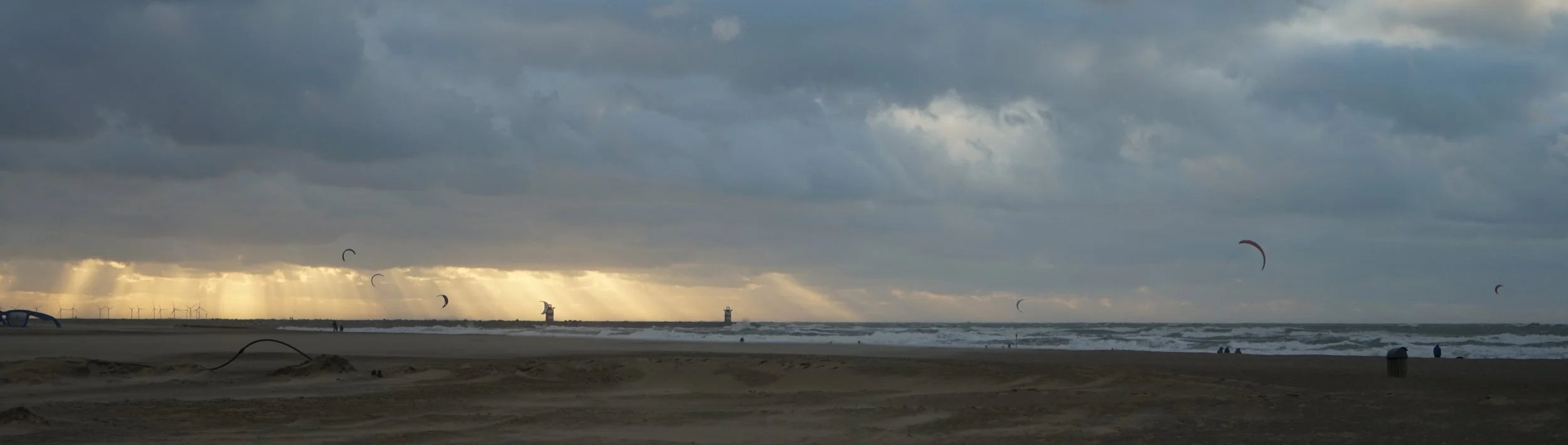
My second year on a directional, I made a deal with myself: no twin tip. Not for a session, not on a marginal day, not when it was cross onshore and messy. Every session, directional.
It sounds dramatic. It is the single reason I can ride one now.
Without a rule like that, the twin tip stays in the car and you only ride the directional when conditions are perfect. Perfect days are rare, so you get maybe six sessions a year on it, and six sessions a year is not learning. Leaving the twin tip at home forces you onto the directional in mediocre wind, in chop, in the conditions where you actually build the balance. It is uncomfortable and it works. It is the same reason plateaus break when you change what you do rather than how hard you try.
You might not like it. That is allowed. Some riders try a directional properly and go back to the twin tip, and there is nothing wrong with that. I still grab my twin tip now and then for a completely different feeling, and it makes me better on both. But give it a proper year before you decide, not two frustrating afternoons.
You do not need a smaller kite
This myth stops more people than any board ever has.
Yes, plenty of wave riders prefer smaller kites, because at that level you want the kite parked and out of the way while the wave does the work. That is a level you are not at yet, and it is not a level you reach by making your first sessions harder.
Use the kite you already own, in the size you would have used on a twin tip that day. Extra volume under your feet means you need less power, not more, so if anything the sizes you have are generous rather than tight. Learn to ride first, get opinionated about kite sizes later. If you want to sanity check what you own, stop guessing your kite size and the difference between big air, freeride and wave kites both help.
Learn without straps
If your board came with front straps, take them off for the first while.
Straps make everything easier immediately and cost you the thing you came for. With your feet locked in you can edge, load and ride it like a twin tip, which is precisely the habit you are trying to lose. It becomes a glorified twin tip with a nose and tail, and you learn almost nothing about how the board actually behaves.
Strapless is harder for a few sessions and then it teaches you what the board is doing under you. Your feet learn where the pressure needs to be because nothing else is holding them there. If you want straps later for jumping or for heavier conditions, fine, go for it. Just learn the board first.
And please, no board leash
At some point, standing in waist deep water for the fourth time, a board leash starts to sound reasonable. It is not.
A directional is a big object with fins on it, tethered to you by an elastic cord. When a wave takes the board, the cord loads up and returns it at speed, fins first, toward the person on the other end. This is exactly why leashes disappeared from kitesurfing, and the most common kitesurf injuries shows what a board moving at that speed does to a face.
Body drag for it instead. On a directional this is genuinely easier than on a twin tip, because the board floats and comes toward you rather than sinking away from you. Every retrieval is kite control practice you did not plan to have.
Before you wax the deck
You do not need the right board, the right kite or the right forecast. You need a directional that floats, the gear already in your bag, and a stretch of season where the twin tip stays at home.
The first sessions will be clumsy and you will lose the board more than you keep it. Then one day a rail holds through a proper turn with nothing strapping you down, and you understand why the people who ride these things will not shut up about them.
Just keep your mouth closed during those early water starts. The sea does not need you drinking any more of its salt.
xox Berito
Quick Answers
-
Whichever one you can borrow first. If you are buying, a used wave or freeride shape with kite construction and plenty of volume for your weight is the easiest place to start. Small, thin, performance shapes make the first sessions much harder than they need to be.
-
For a session, yes, and it will teach you the feeling. Not as a learning board. Surf construction is built for paddling loads and comes apart under kite landings, so you will be repairing it long before you can ride it properly.
-
No. Use the size you would have used on a twin tip that day. The extra volume under your feet means you need less power rather than more, and smaller kites are a preference riders develop later for wave riding.
-
Without. Straps turn a directional into a twin tip with a nose, and you skip the part where you learn how the board actually behaves. Add them later if you want them for jumping.
-
Because grip comes from the fins rather than from a buried heel edge. Edging the board hard, which is what a twin tip rewards, stalls a directional and sinks the tail. Upwind improves as soon as that habit fades.
-
A few sessions to ride away, a season to feel settled, and that timeline depends almost entirely on how often you ride it rather than on your gear.